What Size Bookshelf Do I Need?
Selecting the right bookshelf size depends on your collection size, available space, and future growth. Here's how to calculate your needs:
Measure Your Books: Stack your books spine-to-spine and measure the total length. Add 20-30% for growth and breathing room. For example, if you have 60 inches of books, look for shelves providing 75-80 inches of space.
Consider Ceiling Height: Tall bookshelves (6-8 feet) maximize vertical space in rooms with standard 8-foot ceilings. For higher ceilings, consider floor-to-ceiling built-ins or stacked units. Leave 12-18 inches between the top shelf and ceiling for visual balance.
Width Options: Standard bookshelves range from 24-48 inches wide. Wider shelves may require center supports to prevent sagging. For heavy books, keep spans under 36 inches.
Depth Requirements: Most books need 10-12 inches of depth. Oversized art books require 12-14 inches. Shallower shelves (6-8 inches) work for paperbacks and decorative displays.
How Many Shelves Should My Bookshelf Have?
The ideal number of shelves balances storage capacity with flexibility:
Adjustable Shelving: The most versatile option allows you to customize spacing as your collection changes. Look for shelves with pegs or tracks that adjust in 1-inch increments. This accommodates everything from paperbacks to large coffee table books.
Shelf Spacing: Standard shelf spacing ranges from 10-12 inches for typical hardcovers. Allow 12-14 inches for larger books and collectibles. Paperbacks fit comfortably on shelves spaced 8-10 inches apart.
Number of Shelves: A 72-inch tall bookshelf typically has 5-6 shelves, while a 48-inch unit has 3-4 shelves. More shelves increase capacity but reduce flexibility for displaying taller items.

What Material Makes the Best Bookshelf?
Bookshelf durability depends heavily on material choice and construction quality:
Solid Wood: The gold standard for bookshelves. Oak, maple, and cherry offer exceptional strength and longevity. Solid wood handles heavy loads without sagging and can be refinished. Expect to pay premium prices, but these shelves last generations.
Plywood: Engineered with cross-grain layers for superior strength. Quality plywood rivals solid wood in durability at lower cost. Look for 3/4-inch thickness minimum. Baltic birch plywood is particularly strong and attractive.
MDF (Medium-Density Fiberboard): Smooth, dense material perfect for painted finishes. Heavier than solid wood and resistant to warping. However, MDF cannot support as much weight and is vulnerable to water damage. Good for light-duty or decorative applications.
Particleboard: Budget-friendly but least durable option. Prone to sagging under heavy loads and degrades when exposed to moisture. Acceptable for temporary solutions or very light items but not recommended for serious book collections.
Metal: Industrial-style metal shelves offer modern aesthetics and incredible strength. Steel and wrought iron support heavy loads without flexing. Powder-coated finishes prevent rust. Ideal for lofts, offices, and contemporary spaces.
How Much Weight Can a Bookshelf Hold?
Weight capacity varies significantly based on materials and construction:
Per Shelf Guidelines:
- Solid wood: 50-75 pounds per linear foot
- Quality plywood: 40-60 pounds per linear foot
- MDF: 25-35 pounds per linear foot
- Particleboard: 15-25 pounds per linear foot
- Metal: 75-100+ pounds per linear foot
Book Weight Reference: Hardcover books weigh approximately 1-3 pounds each, while paperbacks weigh 0.5-1 pound. A linear foot of hardcovers typically weighs 15-25 pounds.
Preventing Sagging: Even quality materials sag over time without proper support. For shelves over 36 inches wide, use center supports or brackets. Distribute weight evenly across shelves rather than concentrating heavy items in one area.
Wall Anchoring: Tall, loaded bookshelves must be secured to wall studs to prevent tipping. Use appropriate anchors rated for the unit's loaded weight plus a safety margin.
Should I Get a Freestanding or Wall-Mounted Bookshelf?
Each option offers distinct advantages depending on your space and needs:
Freestanding Bookshelves:
- Pros: Portable and renter-friendly. No wall damage. Easy to move and reconfigure. Available in many styles and sizes. Can be placed anywhere in the room.
- Cons: Takes up floor space. Must be anchored for safety. May not maximize vertical space in rooms with high ceilings.
- Best For: Renters, those who move frequently, or anyone wanting flexibility in room arrangements.
Wall-Mounted Shelves:
- Pros: Saves floor space. Creates floating, modern aesthetic. Can be installed at any height. Maximizes awkward spaces like above doors or windows.
- Cons: Permanent installation requires wall anchors. Must locate studs for proper support. Leaves holes when removed. Less capacity than freestanding units.
- Best For: Homeowners, small spaces, modern designs, or creating custom configurations.

How Do I Organize Books on My Bookshelf?
Book organization methods range from practical to purely aesthetic. Choose based on how you use your collection:
Alphabetical by Author: The library method makes finding specific books effortless. Organize fiction and non-fiction separately. Works best for large collections where findability is crucial.
By Genre or Subject: Group books by category like fiction, biography, cooking, travel, etc. Within each category, arrange alphabetically. This system suits readers who browse by mood or topic.
By Color: Creates stunning visual impact by arranging books in rainbow order. Perfect for design-forward spaces where aesthetics outweigh practical organization. Works best for people who remember books by cover color.
By Size: Arranging books by height creates clean lines and maximizes space. Place tallest books on bottom shelves for stability. This functional approach suits uniform modern interiors.
By Frequency of Use: Keep frequently read books at eye level (48-60 inches high). Place reference books and keepsakes out of reach on top shelves. Store rarely accessed items on bottom shelves.
Combination Methods: Many people use hybrid systems like genre by color, or alphabetical within size categories. Experiment to find what works for your habits and space.
How Do I Style a Bookshelf Like a Designer?
Professional-looking bookshelves balance books with decorative objects using these techniques:
The 70/30 Rule: Fill shelves with approximately 70% books and 30% decorative items. This maintains the bookshelf's purpose while adding personality and visual interest.
Vary Book Arrangements: Mix vertical stacks with horizontal piles. Laying 2-3 books flat creates platforms for small objects and adds rhythm. Avoid making every shelf identical.
Create Visual Breaks: Don't pack books tightly across entire shelves. Leave gaps for decorative items, plants, or simply negative space. Eyes need places to rest.
Add Depth: Place some items front and center while pushing books slightly back. This layering creates dimension and prevents a flat, pushed-back appearance.
Use Height Variation: Combine tall vases, medium sculptures, and small objects. Varying heights creates visual interest and guides the eye across the display.
Incorporate Nature: Plants, flowers, shells, or stones add life and texture. Trailing plants like pothos soften hard edges beautifully.
Balance Color: Distribute colors evenly across the bookshelf rather than clustering all bright books together. This creates cohesion and prevents overwhelming spots.
Include Personal Items: Mix in framed photos, travel souvenirs, or handmade objects. These personal touches make your bookshelf unique and meaningful.

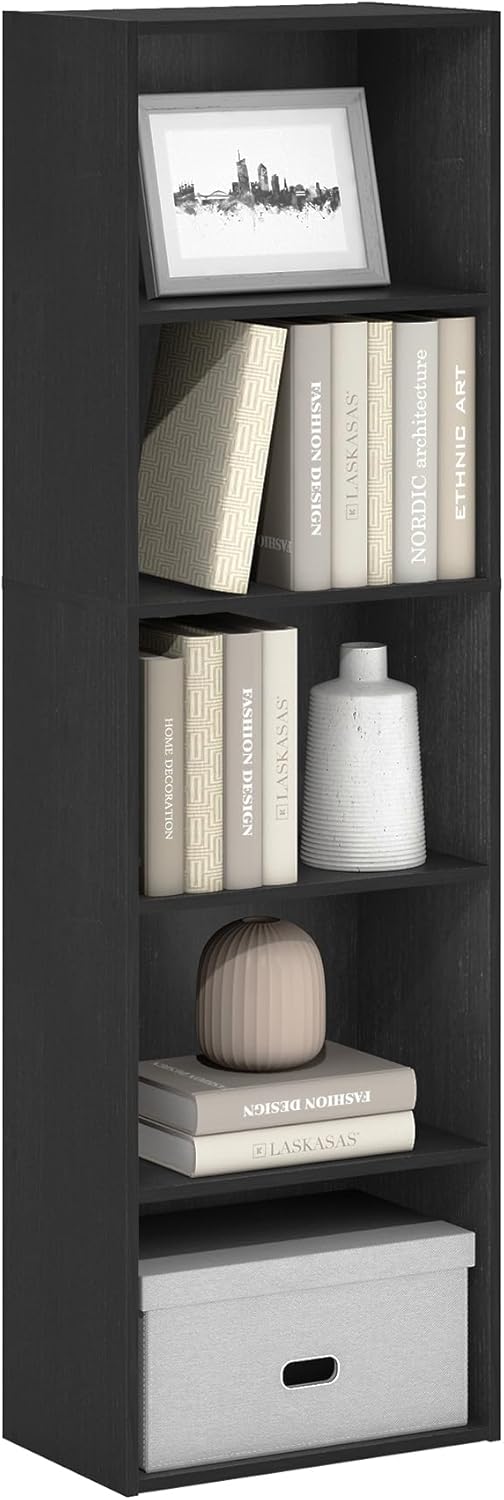
Stylish Storage Solution
Furniwell Contemporary 5-Shelf Wooden Bookshelf
$119.99 $104.99
View DetailsHow Do I Prevent My Bookshelf from Sagging?
Shelf sagging is preventable with proper selection and reinforcement:
Choose Thick Shelves: Minimum 3/4-inch thickness for most applications. For spans over 36 inches or heavy books, opt for 1-inch thick shelves. Thicker materials resist deflection under weight.
Add Center Supports: Install center brackets or supports on shelves longer than 36 inches. These prevent long-term sagging by distributing weight to multiple points.
Use Shelf Brackets: For wall-mounted shelves, place brackets every 24-32 inches. Heavy-duty brackets rated for your load prevent bowing and increase safety.
Distribute Weight: Avoid concentrating heavy books in one area. Spread weight evenly across the shelf length. Place heaviest books on lower shelves where they're easier to support.
Reinforce Existing Shelves: Add a lip or edge banding to sagging shelves. Attach a 1x2 inch strip along the front edge to prevent further deflection without replacing the entire shelf.
Flip or Replace: For adjustable shelves showing early signs of sagging, flip them over. The curve will flatten under reversed pressure. Replace severely sagged shelves before they fail.
What's the Difference Between a Bookshelf and a Bookcase?
While often used interchangeably, subtle distinctions exist:
Bookshelf: Technically refers to individual shelves or smaller, open units. Can be wall-mounted or freestanding. Usually under 48 inches tall. Often used for decorative displays mixing books with objects.
Bookcase: Larger, freestanding furniture piece with multiple shelves enclosed in a frame. Typically 60-84 inches tall. Primarily designed for book storage with less emphasis on decorative display. Often features a back panel and may include doors or drawers.
In practice, most people use the terms interchangeably, and manufacturers rarely distinguish between them. Focus on dimensions, capacity, and style rather than the specific terminology.
How Do I Protect My Books on Open Shelves?
Open shelving exposes books to environmental factors that accelerate aging. Protect your collection with these strategies:
Control UV Exposure: Direct sunlight fades covers and brittles paper. Position bookshelves away from windows or use UV-filtering window film. For valuable books, consider glass-doored cases with UV protection.
Maintain Humidity: Ideal humidity ranges from 30-50%. Higher levels encourage mold; lower levels dry and crack bindings. Use a dehumidifier in damp climates or a humidifier in arid regions.
Regular Dusting: Dust accumulation attracts insects and holds moisture. Vacuum book tops monthly using a soft brush attachment. Wipe shelves with a barely damp cloth.
Proper Spacing: Don't pack books too tightly. Allow slight gaps so you can remove books without damaging spines. Tight packing causes spine stress and makes pulling books difficult.
Vertical Storage: Always store books upright unless oversized. Stacking books horizontally for extended periods stresses bindings. Use bookends to keep rows upright.
Temperature Stability: Avoid placing bookshelves near heating vents, fireplaces, or air conditioning units. Rapid temperature fluctuations damage bindings and paper.
For rare or valuable books, consider enclosed bookcases with glass doors. These provide maximum protection while maintaining visibility and accessibility.