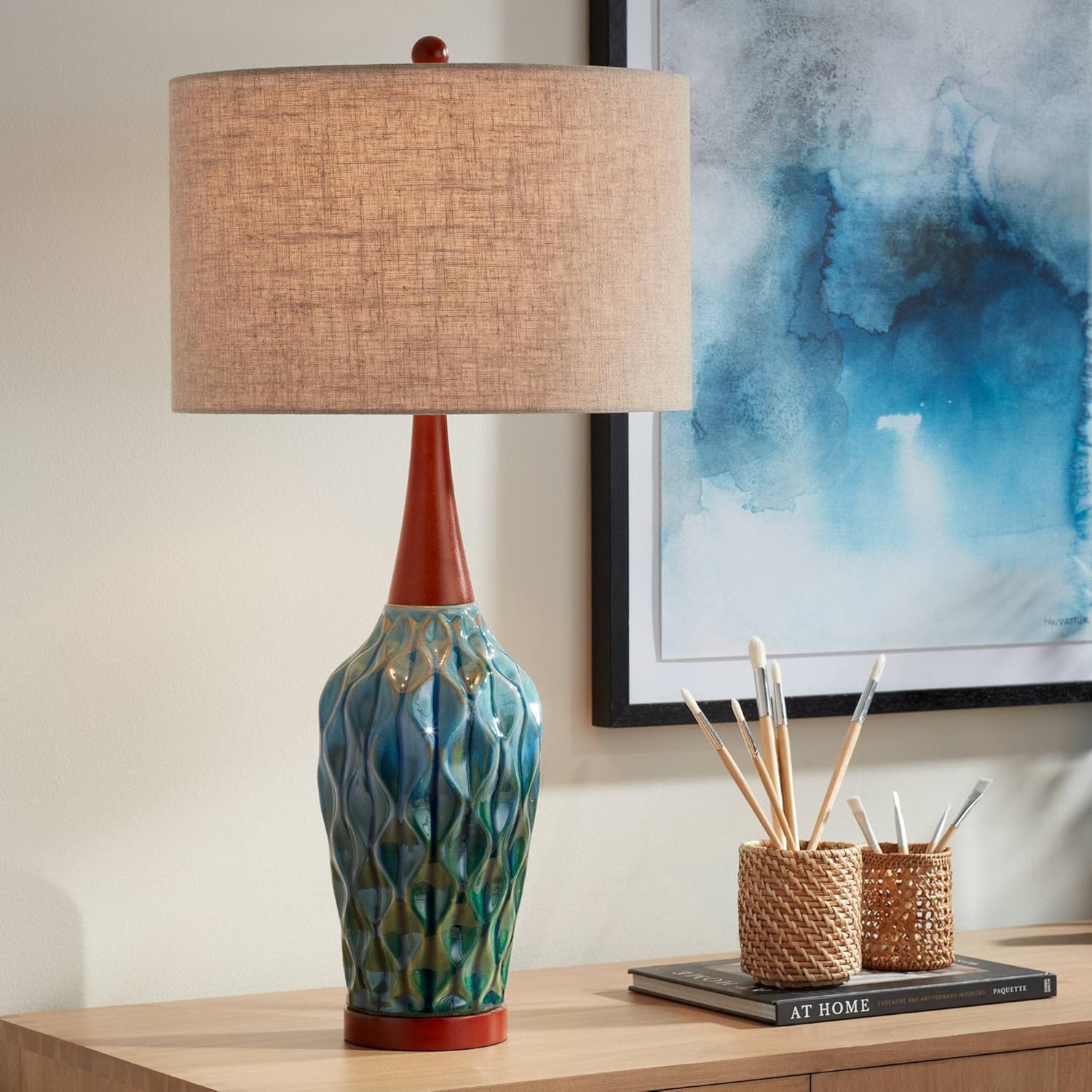
A table lamp does something that a floor lamp, a ceiling fixture, and a desk lamp all fail to do on their own: it brings light down to table height, where it creates warmth at eye level and fills in the dark band that forms between overhead lighting and the floor. That band is exactly why so many rooms feel flat in the evening even when they are technically well-lit. A well-placed table lamp addresses it directly.
But table lamps are surprisingly easy to buy wrong. The wrong height makes the room look awkward. The wrong shade shape diffuses light in the wrong direction. The wrong base material creates a visual mismatch with the furniture it sits on. This guide covers each of these decisions so you can buy with confidence.
Table Lamp vs. Floor Lamp vs. Desk Lamp
The three lamp types are often confused, but they serve different functions and have different placement requirements.
A table lamp sits on a surface: a nightstand, side table, console table, dresser, or bookshelf. Its scale is defined by the surface it sits on. It provides ambient or task light at a lower level than ceiling fixtures, contributing warmth to the room's overall lighting scheme.
A floor lamp stands independently and can be repositioned without a surface. It can take on a larger scale, contribute more total light output, and works well in corners or beside seating where there is no side table available. For a dedicated floor lamp guide, see the floor lamp buying guide.
A desk lamp is a task lamp: its purpose is directional, concentrated light for a specific work area. Output and adjustability matter more than scale or aesthetics. See the home office decor guide for desk lamp recommendations in a workspace context.
Getting the Height Right
Height is the most important dimension in table lamp selection and the most commonly misjudged.
For a bedside or nightstand lamp, the bottom of the shade should sit at roughly eye level when you are sitting up in bed. For most people in most beds, this means a total lamp height (base plus shade) of about 26 to 30 inches measured from the top of the nightstand.
For a living room side table or end table beside a sofa, the bottom of the shade should be at roughly elbow height when seated. The goal is that the shade is not at direct eye level (which causes glare) but not so low that the lamp looks squat and under-scaled relative to the surface and surrounding furniture.
For a console table in an entryway or along a wall, taller works better: a lamp in the 28 to 34 inch range keeps the shade above seated eye level while providing useful ambient warmth for the space around it.
Shade Shape and What It Does to Light
The shade determines the quality and direction of the light more than the bulb itself does. Different shapes produce fundamentally different results in the room.
A drum shade (a straight cylinder) distributes light evenly upward and downward. It is a clean, contemporary shape that works in modern spaces and creates relatively balanced ambient light.
An empire or tapered shade, wider at the bottom than the top, directs more light downward and outward than upward. It creates a pool of focused light beneath the lamp, which is useful for reading and creates a warmer, more directed ambiance. This is the traditional bedside lamp shape for a reason.
An opaque fabric shade in linen, cotton, or silk diffuses light softly and adds warmth to the lamp's glow. A sheer or semi-transparent shade allows more light through the fabric, creating a softer, more glowing effect. Neither is inherently better; the choice depends on whether you want the shade itself to glow or to act as a directed light diffuser.
Base Material and Style
The base carries the lamp's visual personality. It should relate to the other materials in the room without necessarily matching them exactly.
Ceramic bases in neutral tones such as white, cream, terracotta, or matte black are the most versatile option. They read as classic without being fussy and complement almost any furniture style. Fenmzee Bedside Table Lamp demonstrates this well: the proportions are right for a nightstand, the warm-toned shade filters light for genuine reading comfort, and the overall profile does not compete with the furniture around it. Pair two matching ones on either side of the bed for the easiest symmetry upgrade in a bedroom.
Metal bases in brass, chrome, or matte black push toward a more contemporary or industrial aesthetic. Brass in particular has real staying power right now: it works with warm wood tones and adds a note of luxury without looking precious. Industrial-style lamps with metal frames and visible hardware, Onewish Industrial Table Lamps, Set of 2 give you this aesthetic in a matching pair, which is useful for flanking a sofa, a console table, or a symmetrical bookshelf display.
Wood base lamps in natural or stained finishes integrate easily with furniture-heavy rooms and warm-toned interiors. They work particularly well in rustic, Scandinavian, or organic modern settings where the lamp is meant to recede into the room rather than stand out as an object.
Bulb Selection: Temperature and Output
The bulb determines the quality of the light more than almost any other single decision. Two things matter most: color temperature and lumen output.
Color temperature is measured in Kelvin. For living spaces and bedrooms, aim for 2700K to 3000K. This range produces warm, slightly amber light that reads as intimate and relaxed. It is the same temperature range used in well-designed restaurant dining rooms and hotel lobbies. Bulbs above 3500K produce cooler, more clinical light that works in offices and task lighting but makes residential spaces feel institutional.
Lumen output for a table lamp used as ambient or accent light should be between 400 and 800 lumens. A 60-watt equivalent LED (around 800 lumens) is on the higher end and works well for bedside reading. A 40-watt equivalent (around 450 lumens) produces softer ambient light better suited to mood than task.
Most table lamps accept standard E26 base bulbs. LED versions run cooler, last significantly longer, and draw far less power than incandescent equivalents. Look for a Color Rendering Index (CRI) of 90 or above if accurate color rendering matters, particularly in a bedroom where the color of fabric and artwork in lamplight should match how it looks in daylight.
Where Table Lamps Go (and How Many)
The most useful placements for table lamps in a typical home are the following:
- Nightstands: One lamp per nightstand. Matching lamps are the most cohesive approach. Mismatched lamps can work if they share roughly the same height and shade color even while differing in base style.
- Living room side tables: One lamp per side table flanking the sofa. These provide ambient light at a level that supplements overhead lighting and creates visual warmth in the seating area.
- Console tables: A table lamp on a console table, particularly in an entryway or along a hallway wall, adds warmth at a lower level than the ceiling fixture and creates a visual focal point. See the layered lighting guide for more on why this placement has such a disproportionate effect on how a room feels overall.
- Bookshelves: A small lamp on a bookshelf shelf creates a warm accent layer that highlights the display and adds depth to the room's lighting scheme. This works best on lower or mid-level shelves rather than at the very top.
As a rough guide: most living rooms need at least two table lamps to achieve a reasonably layered lighting scheme. A bedroom needs one per nightstand. An entryway or dining room benefits from one on a console or sideboard. If a room currently relies entirely on overhead lighting, adding a single well-placed table lamp is the highest-impact single change you can make to how the room feels at night.
Practical Considerations
Cord management: A table lamp's cord needs to reach an outlet from a surface that may not be near the wall. A cord cover or cable clip can conceal the run along a nightstand edge or baseboard. If the lamp sits on a console table flush against the wall, the cord can typically be hidden behind the furniture entirely.
Dimmer compatibility: Most LED bulbs are dimmable, but not all lamp bases include a dimmer switch. If you want dimming capability, either choose a lamp with a built-in dimmer or use a compatible smart bulb. The ability to dim a bedside lamp without getting out of bed is, once experienced, difficult to give up.
Stability: A lamp that can be knocked over is a hazard in any room with children or pets. Look for lamps with weighted bases or a broad footprint relative to their height. A very narrow base on a tall lamp is a structural problem, not just an aesthetic one.
Browse the full lamps collection for all current options, including floor lamps, table lamps, and desk lamps.