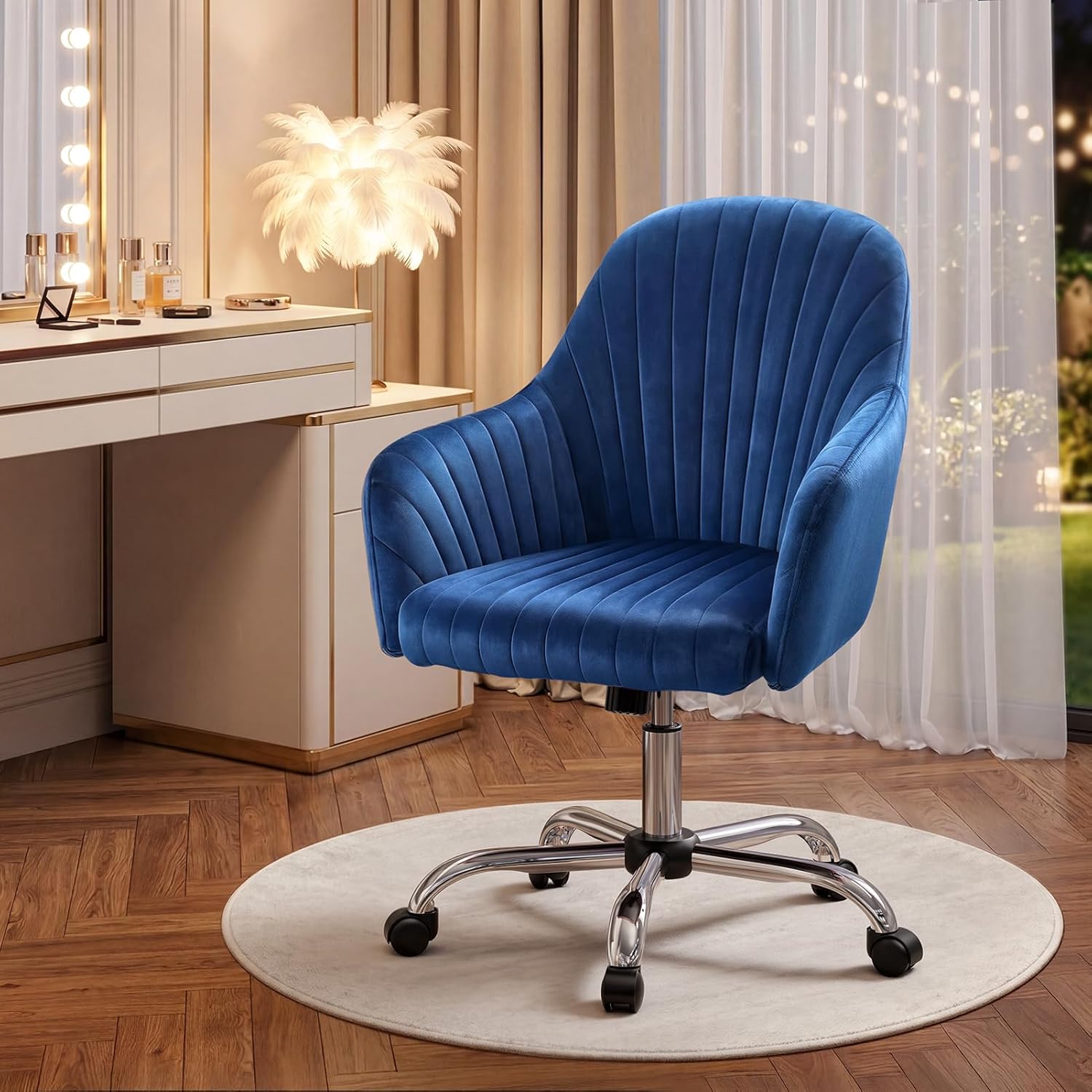
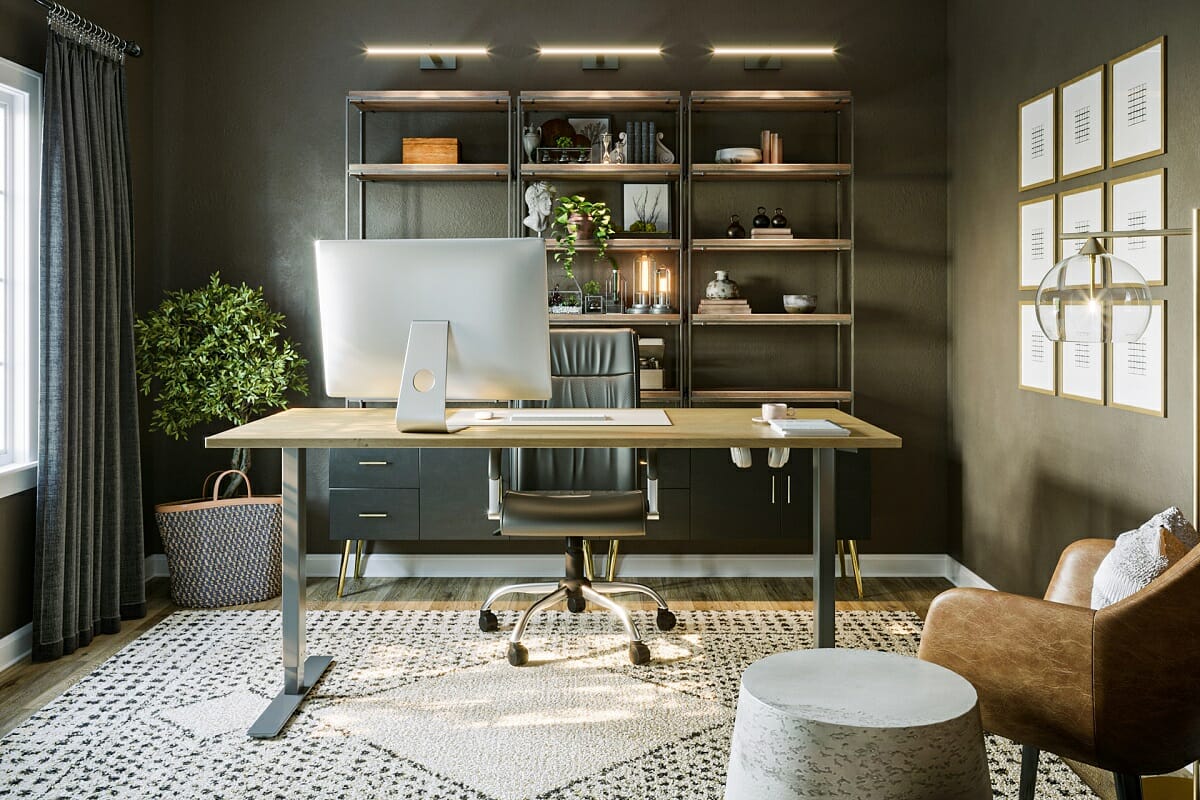
The home office is the newest permanent room in the modern home. What began as a temporary arrangement for many households has evolved into a dedicated, daily-use space that a significant portion of the working population now relies on as their primary work environment. Yet the design standards applied to a living room or bedroom rarely get extended to the home office. The result in many cases is a space that is technically functional but subtly demoralizing: a folding table in a corner, a chair borrowed from the kitchen, a tangle of cords beneath a desk that gets ignored until it cannot be.
The home office deserves the same design intention as any other room you spend significant time in. Not because it should photograph well, but because the environment where you work for eight or more hours each day has a measurable effect on concentration, mood, and output. This guide covers every decision involved in building a home office that performs and looks like it was designed on purpose.
The Desk: Your Most Consequential Purchase
Everything in the home office radiates outward from the desk. Get it right and the rest of the room falls into place. Get it wrong and no amount of styling compensates for daily ergonomic compromises or a surface that is either too small or poorly positioned for the work being done on it.
The Standard Fixed Desk
For budgets under $100, a clean, properly sized fixed desk is still the right starting point. The DUMOS 32-Inch Computer Desk is an honest choice for a small-space home office: the compact footprint fits into corners and alcoves where a larger desk would not, the surface accommodates a single monitor and a laptop setup comfortably, and the neutral finish integrates with virtually any room palette. Its limitation is size. At 32 inches, the surface depth is workable but not generous. If your work requires physical documents, drawing tools, or a dual-monitor configuration, the next step up is worth considering before buying.
The L-Shaped Desk
An L-shaped desk is not a luxury for people who actually use the format; it is a functional upgrade that pays for itself in eliminated daily friction. The secondary surface gives you a dedicated zone for a second monitor, a space to spread physical materials while keeping the primary work area clear, or a surface for peripherals (printer, drawing tablet, audio interface) that do not need to be immediately at hand but must be within reach. The Homall L-Shaped Gaming Desk is well-suited to home office use beyond gaming: the carbon fiber texture surface handles daily wear well, the full-length mouse pad keeps the workspace unified, and the cable management ports along the back reduce cord chaos meaningfully. Position the longer arm as your primary work surface with the monitor centered on it, and the shorter arm to your dominant hand side for secondary tasks.
The Height-Adjustable Standing Desk
For anyone spending more than six hours per day at a desk, a height-adjustable desk is among the highest-return investments available for a home office. The research on extended sitting is well established and the benefits of alternating between sitting and standing during the workday, even for thirty to sixty minutes at a stretch, are real and cumulative. The ErGear Height Adjustable Desk brings this capability to a price point that was previously unavailable in a quality motorized frame. The motorized lift moves through its full height range in under thirty seconds, the memory presets eliminate the friction of manually adjusting height each time you want to stand, and the 55-inch desktop surface provides genuine working room for a full professional setup. Pair it with an anti-fatigue mat at the standing position for extended standing periods.
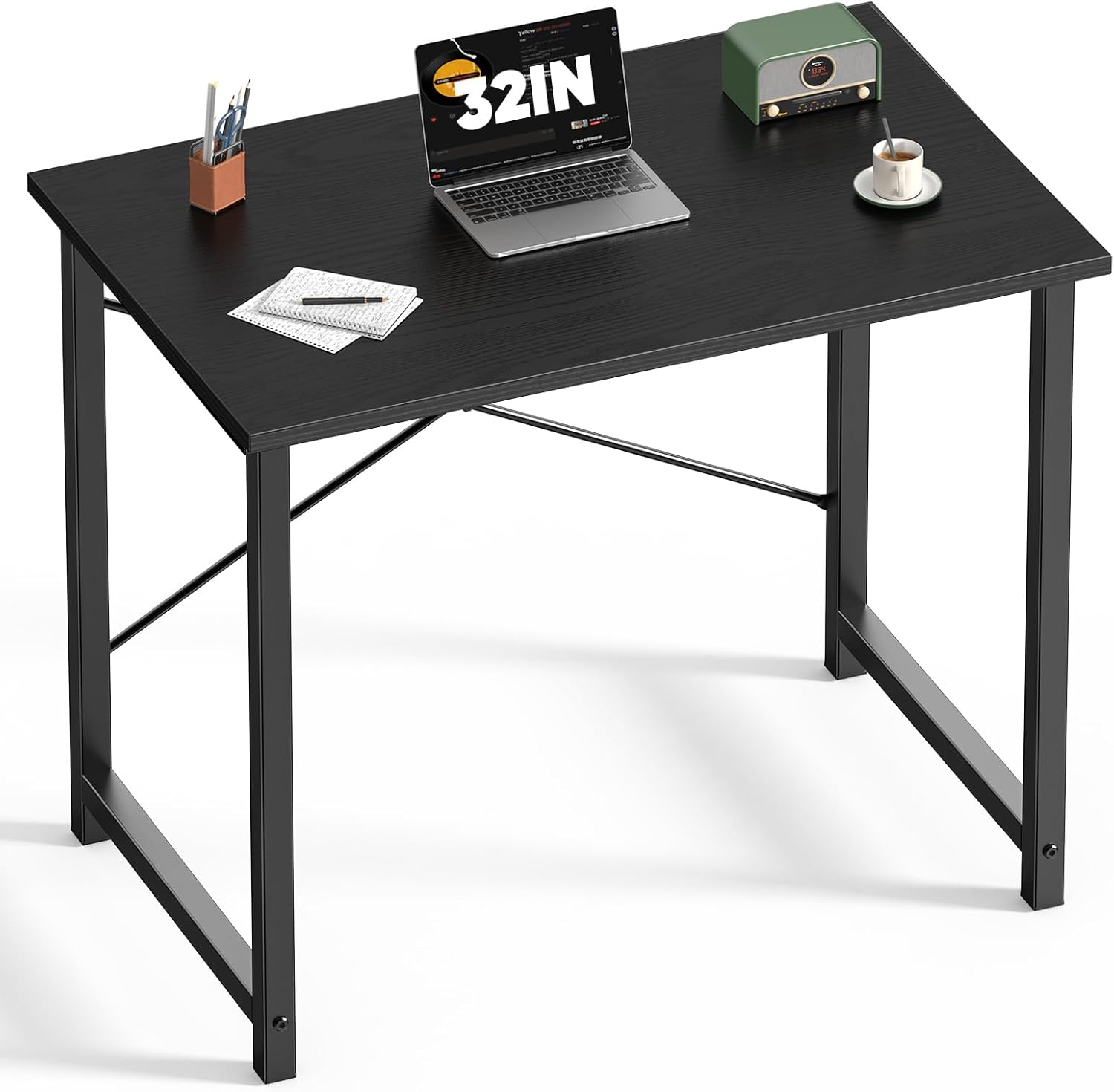
Compact fixed desk for small-space productivity.
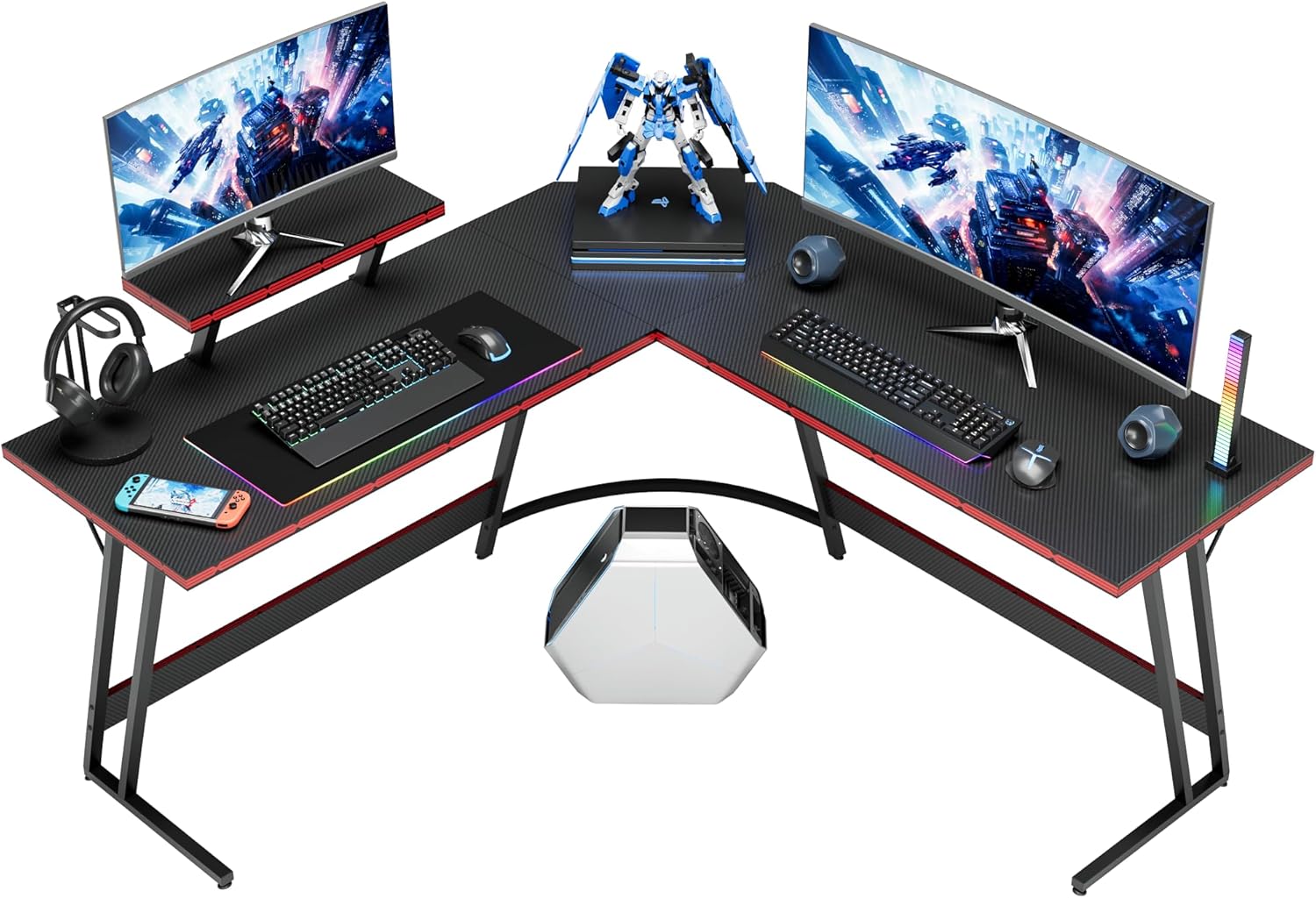
L-shaped layout for dual-zone workflows and multi-monitor setups.
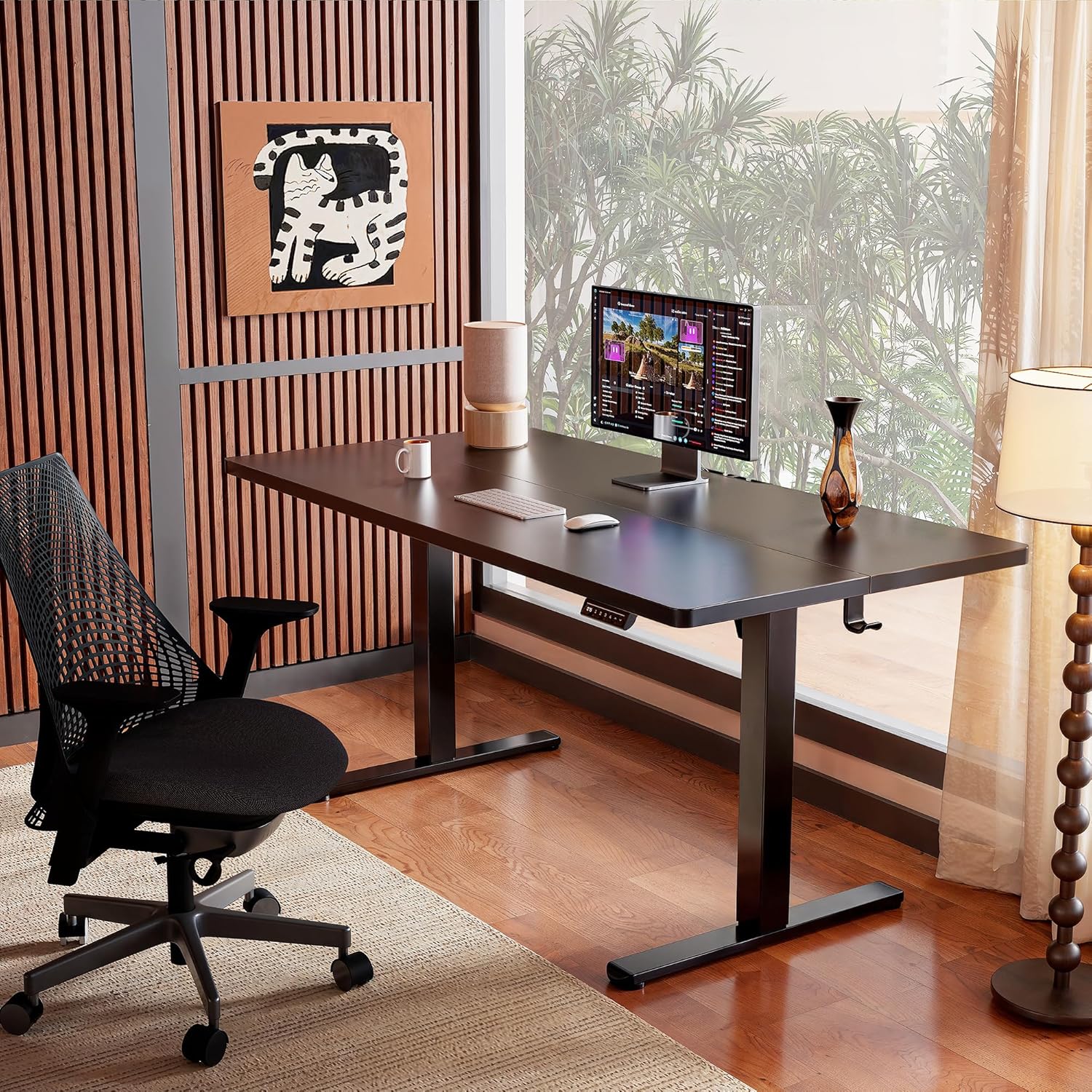
Height-adjustable desk for sit-stand flexibility.
The Chair: The Investment That Earns Its Cost Every Day
The desk chair is the single most body-impacting piece of furniture in the home. A poor dining chair is uncomfortable for ninety minutes at dinner. A poor desk chair is uncomfortable for eight hours every workday. The cost per hour of daily use makes investing in a proper chair one of the most straightforward decisions in home office design.
For full guidance on chair types, ergonomic features, and what to prioritize at different price points, see our dedicated ergonomic office chair guide. For a quick-reference overview by use case:
- For flexible posture and shorter sessions: The Sweetcrispy Criss Cross Desk Chair allows sitting cross-legged or in non-standard positions, making it genuinely different from a conventional office chair. Good for people who find traditional chairs restrictive and work in varied, shorter sessions rather than long fixed-position stretches.
- For a professional look on video calls: The Furmax High-Back Executive Office Chair provides lumbar support, adjustable height, and a high-back silhouette that reads as polished and conventional on screen. Works well in home offices that appear regularly in video meetings.
- For extended, daily-use sessions: The GTPlayer Gaming Office Chair adds a retractable footrest and adjustable lumbar pillow to the standard feature set, addressing the specific fatigue points that accumulate over a long workday in ways a standard task chair does not.

Flexible posture support for creative and short-form sessions.

Executive profile that looks polished on calls.

Extended-session comfort with footrest and lumbar support.
Lighting: The Productivity Variable Most Home Offices Get Wrong
Lighting in a home office affects more than atmosphere. It determines how long you can work comfortably at a screen, how well you can read physical materials, and how much visual fatigue you accumulate over the course of a day. Getting it wrong is not just an aesthetic problem; it is a productivity and health problem that compounds over months of use.
For a complete framework on layered lighting across every room, see our comprehensive lighting guide, which covers home office lighting in its own dedicated section. For placement-specific guidance at the desk, see our desk lamp ergonomics guide. The principles worth internalizing immediately:
- The room's ambient light level should roughly match your monitor brightness. A bright screen in a dark room is the primary driver of eye strain during screen work, not the screen itself.
- The desk lamp should come from the side of your non-dominant hand to avoid casting a shadow on your writing or drawing hand.
- Color temperature in the office should be 3500 to 4000K during working hours, slightly cooler than living spaces and more conducive to sustained alertness. Shift toward 2700K in the evening if you work late.
For the ambient layer, a floor lamp in a corner of the office behind or beside the desk provides indirect light that brightens the room without directing glare at the screen. The Torondo Dimmable Industrial Floor Standing Lamp works well in this position: the industrial aesthetic suits the functional character of most home offices, the dimmer switch allows precise brightness adjustment throughout the day, and the shade redirects light upward and outward rather than directly toward the work surface. The Addlon Modern Black Floor Lamp is a cleaner-lined alternative for offices with a minimal or contemporary aesthetic that does not want the visual weight of an industrial fixture.
In offices where floor space is limited, the SUNMORY Floor Lamp with Shelves solves both the lighting and the storage problem at once. The integrated shelving provides a small but useful surface at the lamp's base for frequently accessed items, reference books, or a plant, while the lamp itself provides warm ambient light at floor level. In a compact home office, a piece that carries two functions is worth considering seriously over two separate pieces that each require their own footprint.

Dimmable ambient light for long workdays.

Clean-lined floor lighting for minimalist office setups.
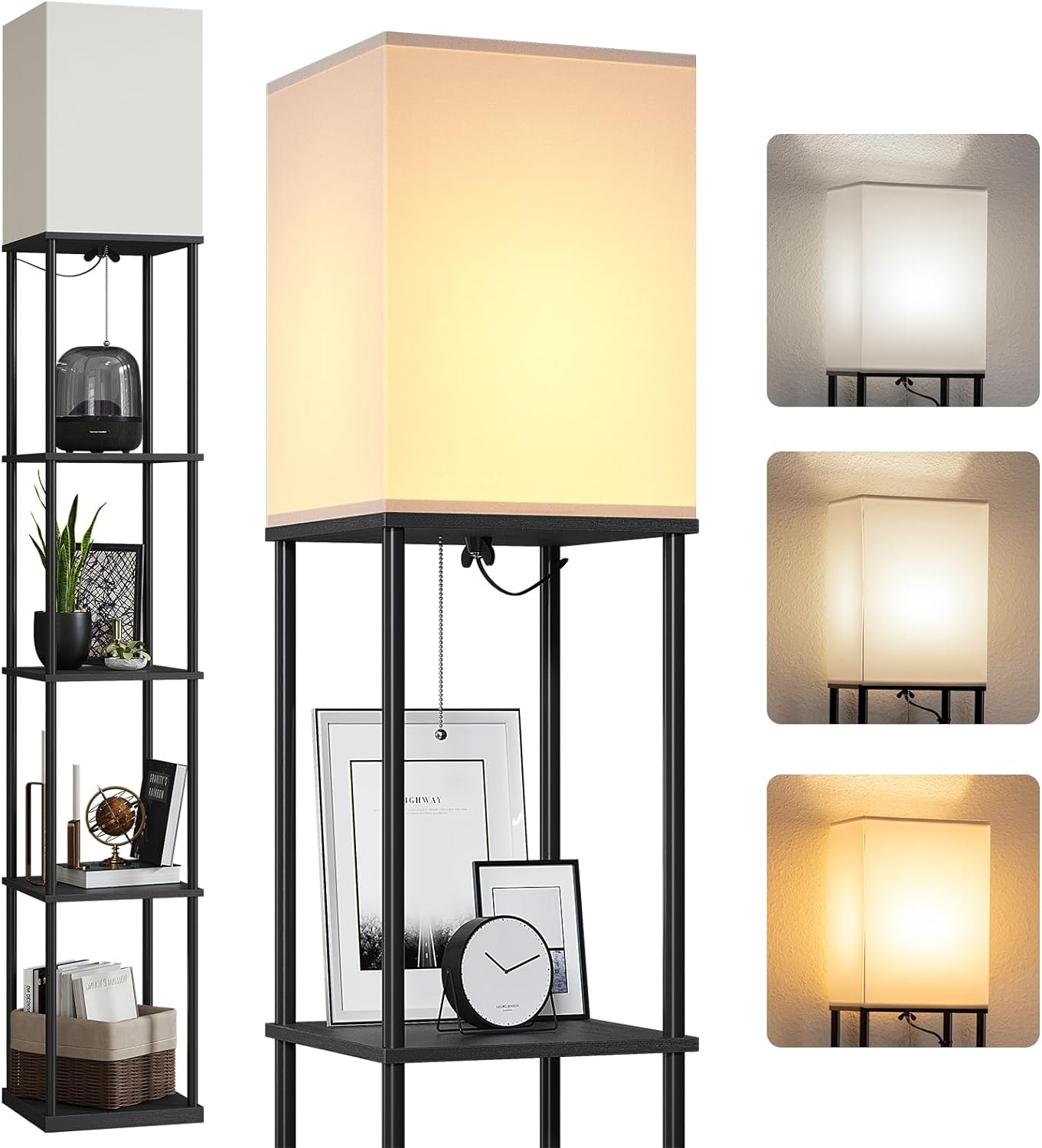
Dual-purpose lighting with built-in display storage.
Storage and Bookshelves: Function That Improves the Room
A home office without dedicated storage inevitably migrates clutter to the desk surface, which is the worst place for it. Books, reference materials, files, equipment, and the accumulated detritus of daily work need a designated off-desk home. Bookshelves are the most effective solution in a home office context because they serve simultaneously as storage and as a composed visual backdrop, including for video calls.
A well-organized bookshelf behind the desk signals competence and character. A blank wall behind the desk, or worse, a pile of boxes or file folders, signals an unfinished space. The bookshelf is one of the few pieces of office furniture that is genuinely performative in a positive sense: what is on it says something about the person who put it there. For detailed guidance on how to style and organize bookshelves, see our bookshelf styling guide and our comparison of floating shelves versus freestanding bookshelves.
For a clean, modern office aesthetic, the VASAGLE 5-Tier Modern White Bookshelf provides ample storage in a light-toned frame that keeps the room feeling open. The white finish reflects light and suits offices with natural or neutral palettes, working particularly well as a video call backdrop where the light tones read as professional and uncluttered. For offices with a heavier, darker aesthetic or rooms with deeper wall colors, the Shintenchi 5-Tier Industrial Bookcase combines a matte black metal frame with wood-toned shelves in a more anchored, substantial form that suits industrial and mid-century-adjacent design directions.

Bright, modern bookshelf for reference storage and display.

Industrial storage that anchors darker office palettes.
Plants and Natural Elements: The Productivity Benefit Most Offices Skip
Research on biophilic design, the incorporation of natural elements into built environments, consistently finds that the presence of plants in a workspace reduces perceived stress, improves concentration, and increases self-reported wellbeing during working hours. The effect is not dramatic, but it is consistent across multiple studies and costs almost nothing to implement. For a home office where the occupant works daily, this is worth acting on.
The simplest approach is a small plant or terrarium on the desk or bookshelf. A living plant on a corner of the desk provides a point of visual rest for eyes that spend hours fixed on a screen, which matters both for cognitive recovery and for the feel of the room. A single well-chosen plant in a simple pot is more effective than several plants competing for notice.
Color, Atmosphere, and Making the Office Feel Like a Room
The most common deficiency in home offices is that they feel like workstations rather than rooms. A workstation is defined by its equipment. A room is defined by its atmosphere. The difference lies in the non-functional elements: the art on the wall, the rug on the floor, the plant on the shelf, the lamp in the corner, the color behind the desk.
Wall color in the home office deserves more deliberate thought than it typically receives. Whatever sits behind you is visible on every video call and communicates something about your environment to anyone on the other end of it. Deep blues and greens are associated with focus and calm and read well on screen. Warm neutrals (oat, warm white, sand) convey approachability without demanding attention. The builder's beige left behind by the previous occupant communicates nothing at all. Choose deliberately.
A small rug under the desk chair anchors the workspace within the larger room, defines the office zone even in a shared space, and provides acoustic dampening that reduces the echoey quality of hardwood or tile floors during calls. Size it so that the chair, when pushed fully back, remains on the rug. A 5x7 or 6x9 area rug works for most desk configurations.
Mirrors in the Home Office: The Small-Space Trick
In compact home offices, a large mirror on the wall opposite the primary light source does two things at once: it reflects light back into the room, making the space feel brighter without adding any fixture, and it extends the perceived depth of the room, making it feel more spacious than it is. A full-length arched mirror leaned against a wall in this position adds a soft vertical element to a room otherwise defined by rectangular monitors and rectangular furniture, and it can be repositioned easily as the layout of the room evolves. See our small space design guide for additional mirror placement principles that apply equally to compact home offices.
Cable Management: The Detail That Defines a Professional Setup
No home office design reads as finished with visible cable chaos. A desk with a tidy, routed cable situation looks intentional; a desk with cords running in every direction looks improvised regardless of how good the furniture around it is. Practical cable management requires three things: bundling cables together where possible, routing them to the back or underside of the desk surface, and providing a fixed point for power strips and adapters that keeps them off the floor and out of sightlines.
Height-adjustable desks require a cable management solution that accounts for the moving surface. A retractable cable sleeve or a cable chain keeps cords from tangling or pulling as the desk height changes. This is the one addition most standing desk owners wish they had addressed at setup rather than after the fact.
Frequently Asked Questions: Home Office Decor
What is the most important element in a home office?
The chair. You use it more than any other piece of furniture in your home, and the ergonomic consequences of a poor one accumulate across months and years. More than the desk, more than the monitor setup, more than any decor element, the chair is the investment that pays forward on every day you work from home. If budget is constrained, cut from decorative elements before cutting from the chair.
How do I design a home office in a small space?
Use a corner: an L-shaped desk or a compact desk positioned in a corner uses the walls as its second and third sides, freeing the rest of the room for other uses. Use vertical storage with bookshelves or floating shelves to keep the floor clear. A large mirror on one wall makes the space feel considerably larger by reflecting both light and depth. Limit what sits on the desk surface; visible clutter in a small office amplifies the psychological sense of overwhelm during work. See our small space design guide for principles that apply directly to compact home offices.
How should a home office be lit for video calls?
The primary light source should come from in front of you, not behind. A window or lamp positioned behind you creates a silhouette effect on camera that makes you difficult to see. Face the window if possible, or position a desk lamp between you and the camera so it illuminates your face rather than your back. Warm-toned light (2700 to 3000K) is more flattering on video than cooler daylight-temperature light. Avoid relying on overhead lighting alone during calls, as it creates unflattering shadows under the eyes and nose. See our desk lamp placement guide for detailed setup guidance.
What is the ideal desk height for a home office?
Standard desk height is 28 to 30 inches, which suits most adults of average height for conventional seated work. The ergonomic test: when seated with feet flat on the floor, forearms should rest on the desk surface at roughly a 90-degree angle with elbows close to the body. If this geometry does not work at standard desk height, either adjust the chair height (and use a footrest if the seat needs to go higher) or invest in a height-adjustable desk, which eliminates the problem for any user and adds the standing option as a long-term benefit.
Should a home office have a dedicated room, or can it share space?
A dedicated room with a door is significantly better for both the quality of work during the day and the ability to disengage from work in the evening. A physical boundary between the work zone and the living zone has a documented effect on psychological separation from work, which matters for both productivity and rest. If a dedicated room is not possible, a bookshelf or shelving unit used as a room divider creates at least a visual separation that serves a similar function. The key is having some kind of defined boundary that signals, at the end of the workday, that work is done.
What color should a home office be?
Colors associated with focus and calm consistently outperform high-contrast or highly saturated palettes in workspace research: soft sage green, warm off-white, muted blue-green, and earthy terracotta all perform well. Avoid stark white (visually fatiguing under screen light), bright saturated colors (distracting over long sessions), and very dark tones (depressing in rooms with limited natural light). The paint behind the desk is also your video call backdrop, so consider how it reads on screen as much as how it looks in person.