What Size Coffee Table Do I Need?
The right coffee table size creates balance and functionality in your living room. Follow these guidelines for perfect proportions:
Length: Your coffee table should be approximately two-thirds the length of your sofa. For a 90-inch sofa, look for a table around 60 inches long. This creates visual harmony without overwhelming the space.
Width: Allow 14-18 inches between your coffee table and sofa for comfortable legroom. The table should be narrow enough to walk around easily but wide enough to be functional.
Height: The ideal coffee table height is 1-2 inches lower than your sofa seat cushions, typically 16-18 inches tall. This makes it comfortable to reach items and rest your feet.
For sectional sofas, consider the chaise end when measuring. You may need a larger table or multiple smaller tables to balance the longer configuration.
What Shape Coffee Table Works Best?
Coffee table shape should complement your room layout and seating arrangement:
Rectangular: The most versatile option, perfect for traditional and modern living rooms. Works best with longer sofas and provides maximum surface area. Ideal for narrow rooms where you need to maximize length.
Square: Excellent for sectionals or when you have seating on all four sides. Creates intimacy in conversation areas. Best for square rooms to echo the space's proportions.
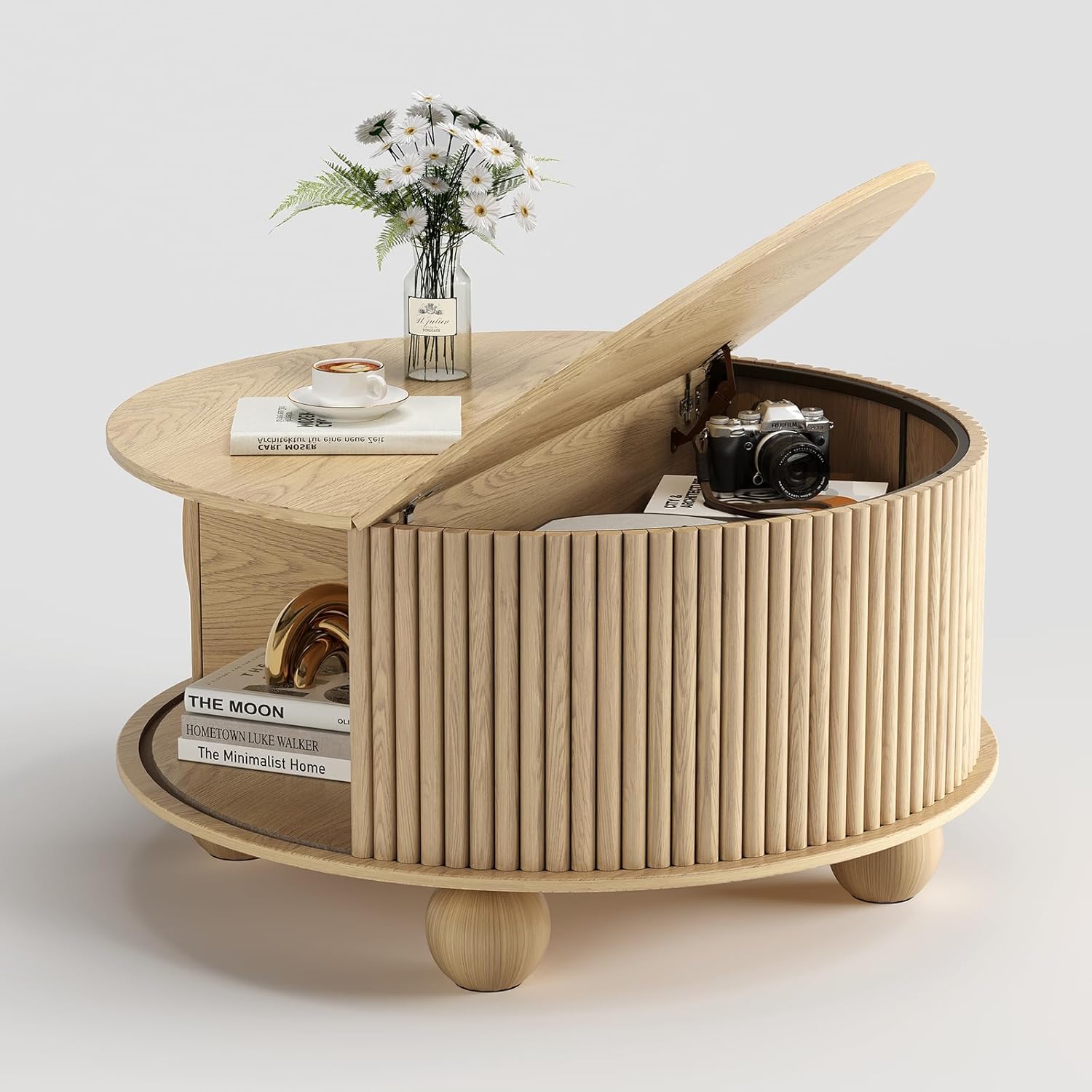
Round: Softens angular furniture and improves traffic flow in small spaces. Great for families with young children due to lack of sharp corners. Works well in rooms with curved or contemporary furniture.
Oval: Combines the benefits of rectangular and round tables. Offers generous surface area while maintaining smooth edges for better flow. Perfect for transitional spaces that blend multiple styles.
What Material Should My Coffee Table Be?
Different materials offer distinct advantages based on your lifestyle and design preferences:
Wood: Timeless, warm, and durable. Solid wood develops character over time and can be refinished. Walnut and oak are popular for their rich tones and grain patterns. Wood suits traditional, farmhouse, and mid-century styles.
Glass: Creates an airy, open feeling perfect for small spaces. Glass tabletops make rooms feel larger by maintaining visual flow. Tempered glass is essential for safety. Best for modern and contemporary designs. Requires frequent cleaning to remove fingerprints and smudges.
Metal: Industrial and modern, metal coffee tables offer striking visual appeal. Iron, steel, and brass are popular choices. Very durable and easy to maintain. Works well in contemporary, industrial, and eclectic spaces.
Marble: Luxurious and sophisticated with natural veining that makes each piece unique. Heavy and stable, marble is heat-resistant but prone to staining. Requires sealing and careful maintenance. Perfect for elegant, upscale interiors.
Mixed Materials: Combining materials like wood and metal or glass and wood adds depth and interest. These pieces work across multiple design styles and add visual complexity.

Modern Style Option
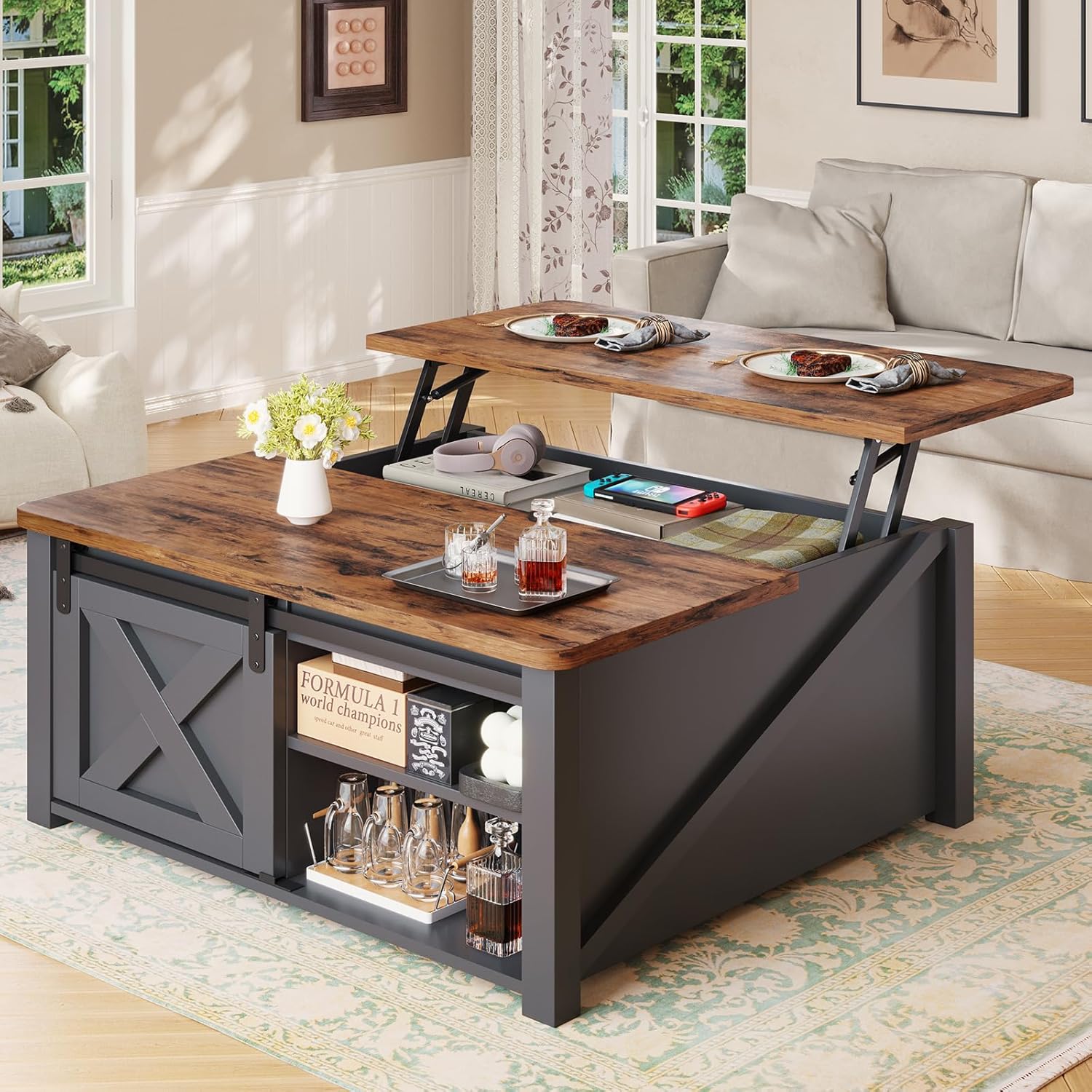
Jimeimen Farmhouse Lift Top Coffee Table with Storage
$249.99 $229.99
View DetailsDo I Need Storage in My Coffee Table?
Storage can significantly enhance your coffee table's functionality, but it depends on your needs:
When You Need Storage:
- Small living rooms where every piece must multitask
- Families with children who need to hide toys quickly
- Media enthusiasts who want to store remotes, magazines, and electronics
- Minimalists who prefer clean surfaces without visible clutter
Storage Options:
- Drawers: Hide remotes, coasters, and small items while keeping them accessible
- Shelves: Display books, baskets, or decorative items while maintaining open feel
- Lift-Top: Raises surface closer for comfortable dining or working while revealing hidden storage
- Built-in trays: Keep small items organized without dedicated compartments
If you have ample storage elsewhere or prefer a minimalist aesthetic, a simple tabletop may be more appropriate.
How High Should My Coffee Table Be?
Coffee table height directly affects comfort and functionality. The standard range is 16-18 inches, but the ideal height depends on your sofa and how you use the table:
Standard Height (16-18 inches): Works with most sofas that have 18-20 inch seat cushions. Perfect for casual entertaining, holding drinks, and displaying decor.
Lower Height (14-16 inches): Contemporary and relaxed, lower tables work well with low-slung sofas and modern sectionals. Best if you rarely eat or work at the table.
Taller Height (18-21 inches): More formal and traditional. Easier to reach from deeper sofas. Better for working or dining casually. Not ideal for resting feet comfortably.
When in doubt, measure your sofa seat cushion height and subtract 1-2 inches. This ensures comfortable reaching while maintaining proper visual proportion.
What Style Coffee Table Matches My Decor?
Matching your coffee table to your overall design style creates cohesion:
Modern: Clean lines, geometric shapes, and minimal ornamentation. Look for glass, lacquer, or metal tables with sleek profiles. Avoid heavy wood or ornate details.
Traditional: Rich wood finishes, turned legs, and classic proportions. Consider mahogany, cherry, or oak with carved details. Rectangular shapes with lower shelves are typical.
Industrial: Raw materials like reclaimed wood and metal. Look for visible hardware, wheels, and distressed finishes. Factory-inspired designs with storage work well.
Farmhouse: Rustic wood, distressed finishes, and functional designs. White-washed or natural wood with simple lines. Often features lower shelves or drawers.
Mid-Century Modern: Tapered legs, warm wood tones (walnut, teak), and organic shapes. Simple construction with attention to craftsmanship. Oval and round shapes are popular.
Coastal: Light woods, whites, and blues. Natural materials like rattan, wicker, or driftwood. Weathered finishes that evoke beach cottages.

Can I Use an Ottoman Instead of a Coffee Table?
Ottomans serve as excellent coffee table alternatives with distinct advantages and considerations:
Advantages:
- Soft surface is safer for families with young children
- Provides extra seating when guests visit
- Comfortable footrest for relaxing
- Many styles include hidden storage
- Can be moved easily to reconfigure space
Considerations:
- Requires a tray for stable drink placement
- Soft surface may not suit all decor items
- Fabric requires more maintenance than hard surfaces
- May not provide the same visual weight as a table
Some homeowners use both: an ottoman for everyday use and a tray for entertaining. This hybrid approach offers maximum flexibility.
How Do I Style My Coffee Table?
A well-styled coffee table adds personality without appearing cluttered. Follow these designer principles:
The Rule of Three: Group items in odd numbers (3, 5, 7) for visual interest. Three is most common: a stack of books, a decorative object, and a plant or candle.
Vary Heights: Use items of different heights to create dimension. Stack books to add height under decorative objects. Combine tall vases with low bowls.
Add Texture: Mix materials like wood, metal, ceramic, and glass. Incorporate natural elements like flowers, plants, or stones.
Use Trays: Corralling items on a tray creates cohesion and makes it easy to clear the table when needed.
Leave Space: Don't cover the entire surface. Leave 40-50% open for functionality and visual breathing room.
Reflect Your Personality: Display meaningful items like travel souvenirs, favorite books, or handmade pottery.
How Much Should I Spend on a Coffee Table?
Coffee table prices vary widely based on materials, construction, and brand:
Budget ($100-$300): Particleboard or engineered wood with laminate finishes. Basic construction suitable for apartments or starter homes. Limited longevity but adequate for temporary situations.
Mid-Range ($300-$800): Solid wood or quality mixed materials. Better construction with dovetail joints and sturdy legs. Good balance of quality and affordability. Will last 10-15 years with care.
Premium ($800-$2,000): Hardwood, genuine marble, or designer pieces. Superior craftsmanship with hand-finishing. Unique designs that become room focal points. Investment pieces that last decades.
Luxury ($2,000+): Designer brands, exotic materials, or custom pieces. Heirloom quality with exceptional materials and craftsmanship.
Consider your budget alongside how long you plan to keep the piece. A quality mid-range table often provides better value than replacing budget options every few years.
What Are Common Coffee Table Mistakes to Avoid?
Avoid these common pitfalls when selecting your coffee table:
Wrong Size: Too large overwhelms the space; too small looks insignificant. Always measure before buying and use painter's tape to outline the footprint.
Ignoring Height: Tables too high or low create awkward proportions and discomfort. Maintain that 1-2 inch difference from sofa seat height.
Blocking Traffic: Leave at least 18 inches of walking space around all sides. Consider your room's traffic patterns before committing.
Choosing Style Over Function: A beautiful table that doesn't suit your lifestyle leads to frustration. Be honest about how you use your living room.
Forgetting Durability: If you have children, pets, or entertain frequently, prioritize durable materials over delicate finishes.
No Visual Connection: Your coffee table should relate to other furniture in style, color, or material. It doesn't need to match exactly but should feel intentional.
Taking time to consider these factors ensures you select a coffee table that enhances both the function and beauty of your living space for years to come.