A small living room is one of the most commonly Googled interior design challenges in the world, and for good reason. Many people live in apartments, starter homes, or city condos where the main living space tops out at 12×14 feet or less. At that scale, every furniture choice, color decision, and layout call matters in a way it simply doesn't in larger rooms.
The good news is that small-space design is genuinely well understood. There are specific, repeatable strategies that consistently make compact rooms feel larger, lighter, and more comfortable. Here are twelve of the most effective ones, drawn from the principles interior designers return to repeatedly.
1. Choose Furniture Proportioned for the Space
Oversized furniture is the single most common mistake in small living rooms. A sofa that's 90 inches wide in a 12-foot room consumes most of the floor and makes everything else feel squeezed. Scale your furniture to the room, not your aspirations for a larger one.
Specific guidelines for small rooms:
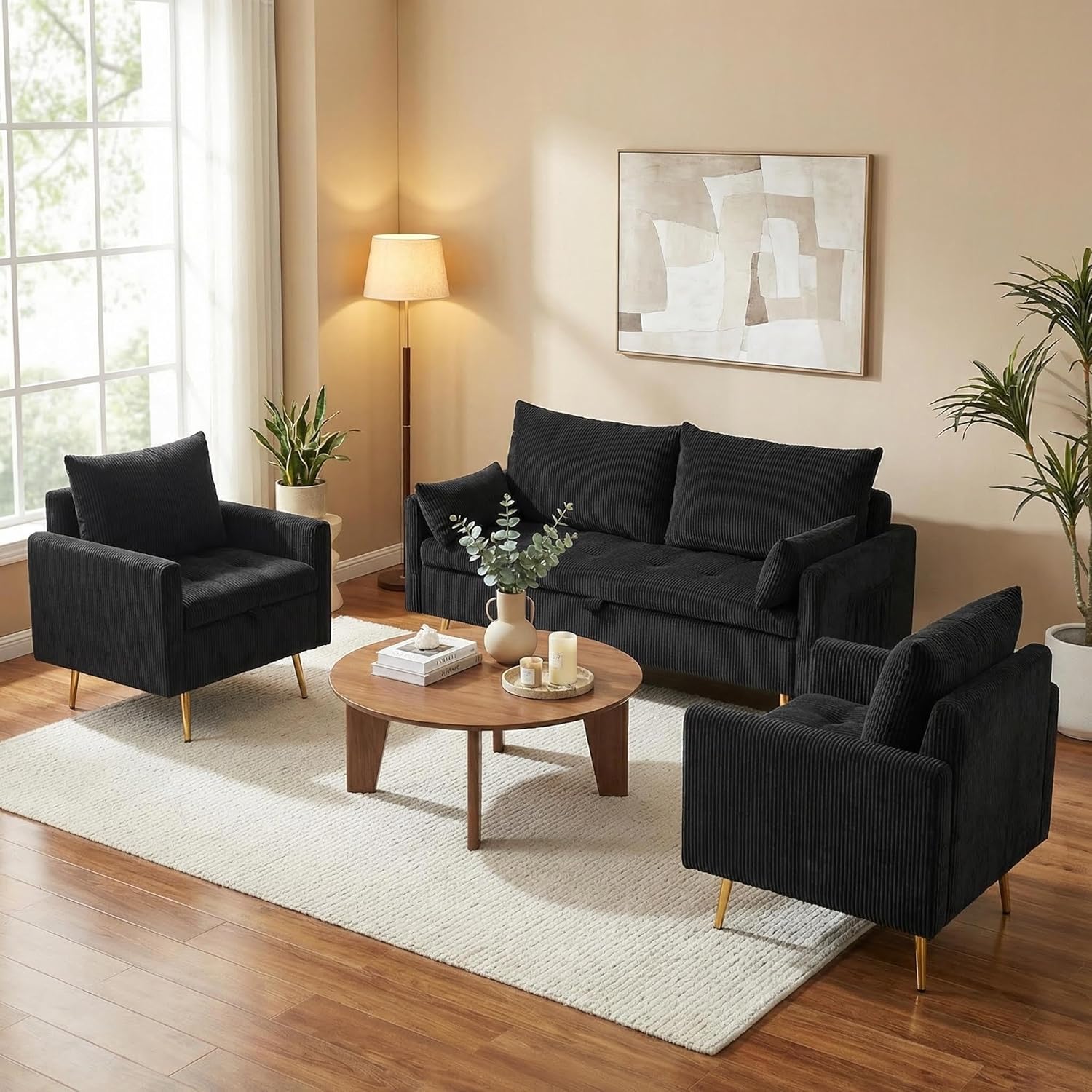
- Sofa: 72–84 inches long (a true 3-seater) or a 2-seat loveseat for very small rooms
- Coffee table: no wider than two-thirds the sofa length
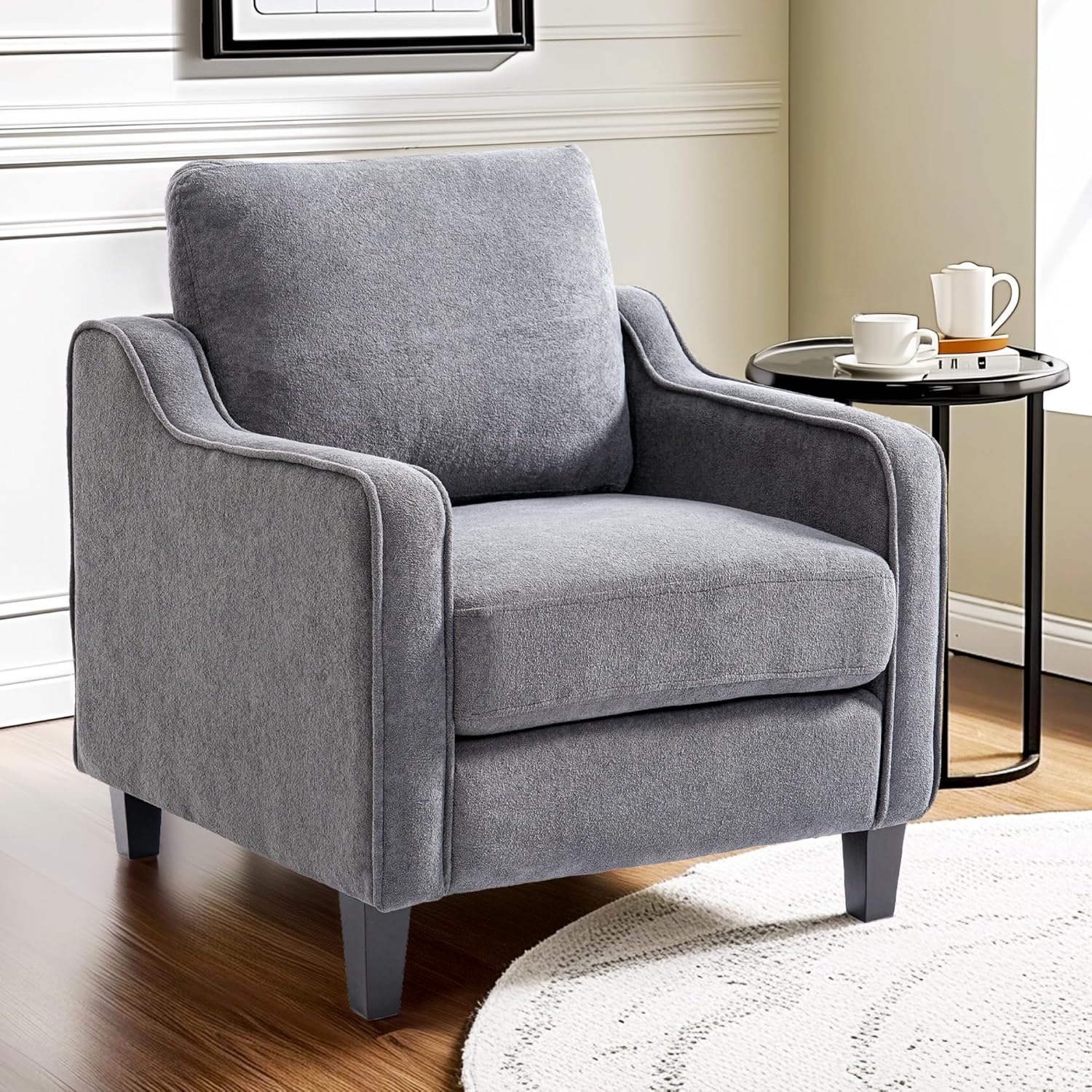
- Accent chairs: look for chairs with a seat depth under 28 inches and lightweight visual profiles (thin legs, open arms)
The Acmease Velvet Accent Chair with Ottoman is an excellent example of a small-room accent chair done right: it packs substantial comfort and strong velvet style into a frame that doesn't dominate the floor. The included ottoman pulls double duty as a footrest and a coffee table surface, solving two space problems at once.
2. Use a Round Coffee Table Instead of a Rectangle
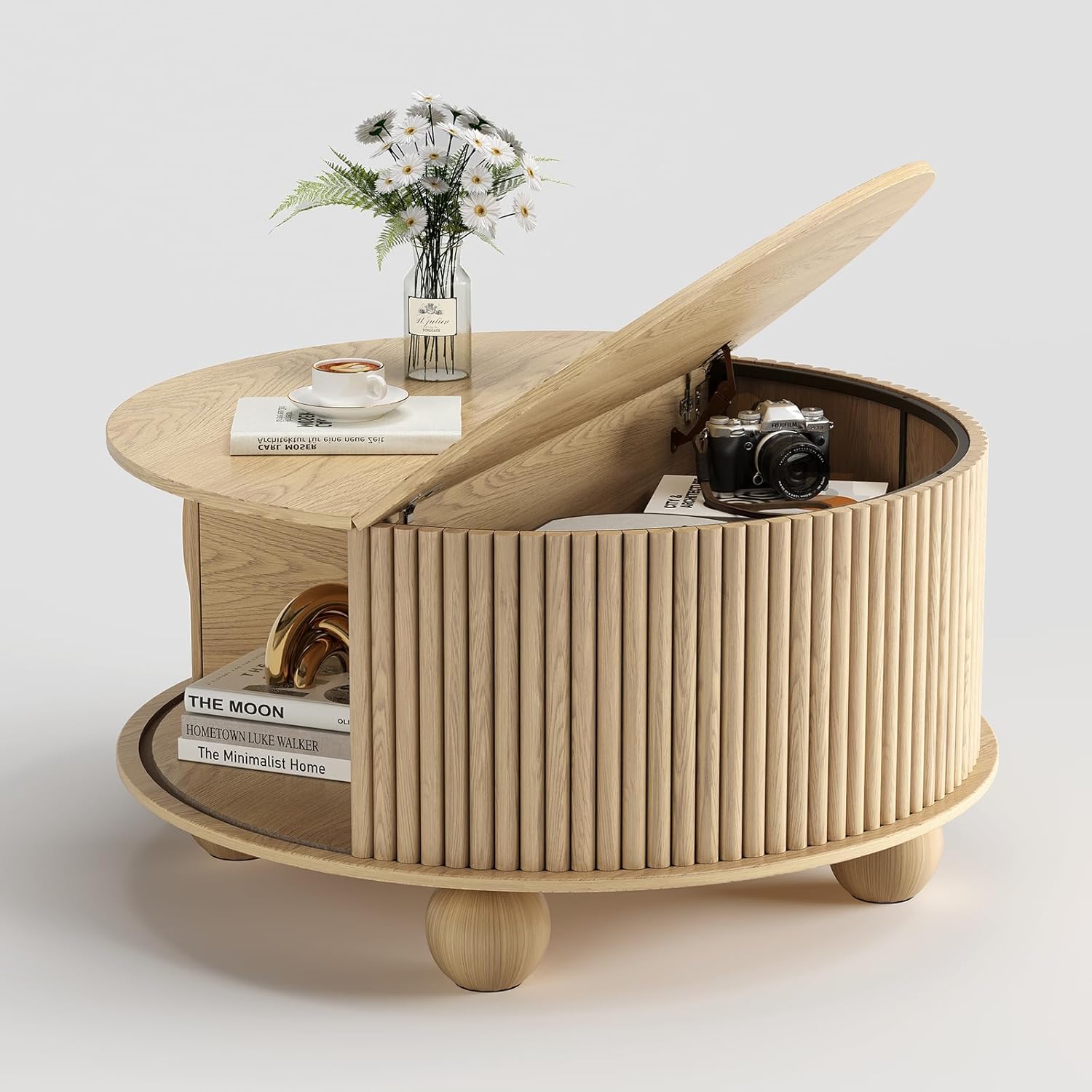
Rectangular coffee tables with hard corners feel bulkier and take up more visual space than round or oval alternatives. In a small room, an oval or round table creates better traffic flow (no corners to navigate around), feels more open, and works with asymmetrical furniture arrangements more naturally.
The JOINICE Oat Round Flip-Top Coffee Table solves a second small-room problem on top of the round shape: it flips open to provide additional surface area when you need it for a dinner tray or a game, then closes flush when you don't. In small rooms where every square inch matters, this kind of multi-function furniture earns its place.
3. Elevate the Eye with Vertical Lines
Small rooms feel larger when you use design elements that pull the eye upward rather than horizontally across the limited floor space. Several techniques achieve this:
- Tall bookshelves: Floor-to-ceiling or near-ceiling bookcases draw the eye up and make vertical space feel deliberate and spacious. See our bookshelf styling guide for how to use them effectively.
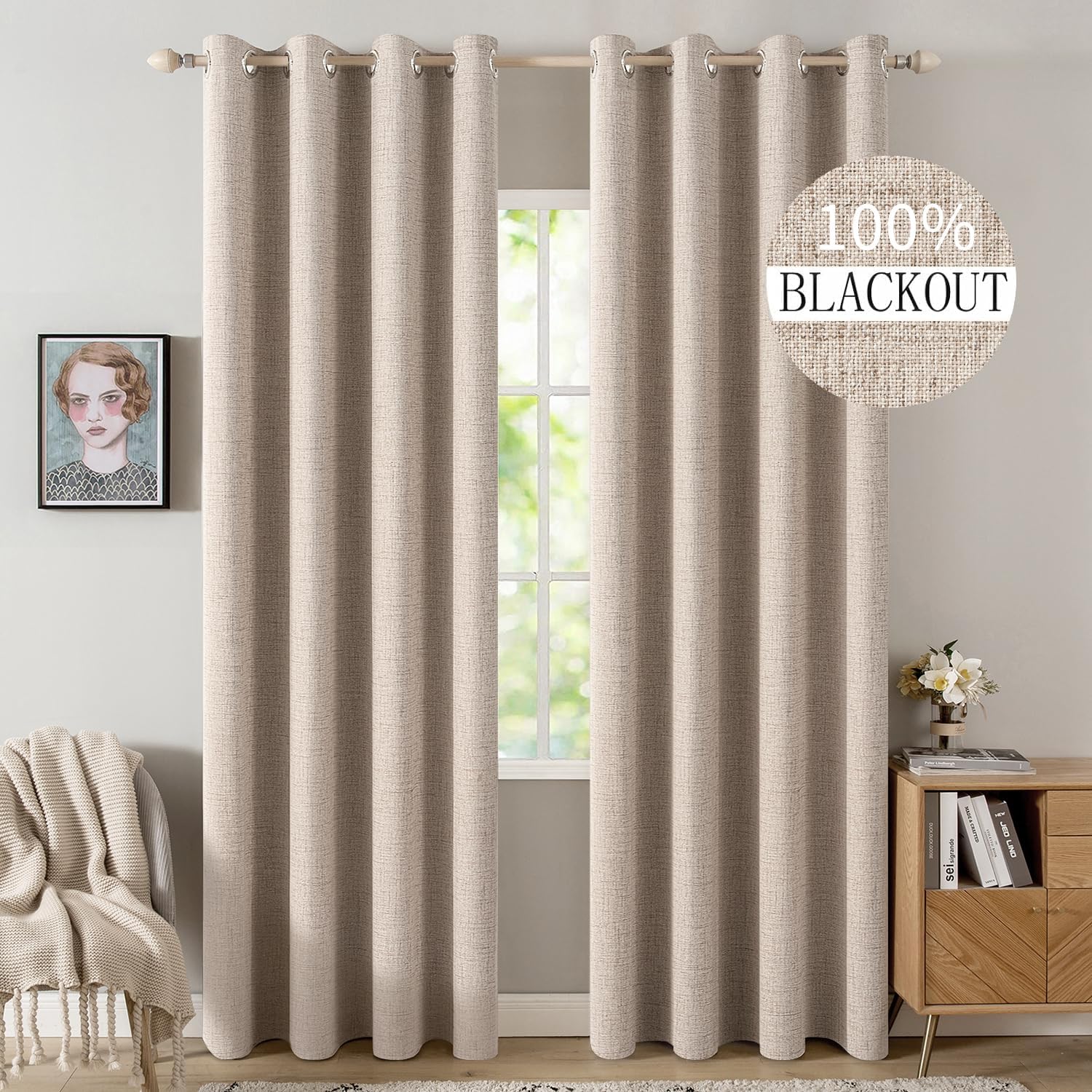
- Curtains hung high and wide: Hang curtain rods as close to the ceiling as possible, and let the panels extend well beyond the window frame on each side. This makes the window appear much larger than it is and brings more light into the room. Linen-textured curtains in a neutral tone achieve this elongating effect beautifully; the texture adds visual interest without any busy pattern.
- Vertical artwork: Portrait-oriented art hung higher than feels immediately comfortable lifts the space and adds height.
4. Hang a Large Mirror (Or Two)
Mirrors are the closest thing to magic available in small-space design. A large mirror on a wall opposite or adjacent to a window reflects both light and depth, making a room look physically larger than it is and significantly brighter. The effect is immediate and striking.
The key is size: small mirrors framed as decor have minimal spatial impact. You want one large mirror, ideally at least 40 inches tall, that reads as an architectural feature rather than a decorative one. The DUMOS Arched Full-Length Mirror is ideally suited to this role: its arch shape is visually elegant rather than purely functional, it's tall enough to create a genuine sense of additional space, and leaning it against a wall rather than mounting it gives you flexibility to move it as the room evolves.
If you can position it to reflect a window or the brightest wall in the room, the effect is amplified considerably.
5. Let the Floor Breathe
The amount of visible floor in a room has a direct, measurable effect on how large it feels. Every piece of furniture with legs that raise it off the floor reveals more floor surface and makes the room feel airier. Furniture that sits directly on the floor (platform sofas, low-slung boxy pieces) blocks the floor and makes rooms feel smaller.
Look for sofas and chairs with tapered or thin legs in metal or wood. Low-profile furniture in terms of frame height is fine; it's the visible gap between the floor and the bottom of the piece that matters.
On the same principle: choose a coffee table with visible legs rather than a solid base. Even a beautiful solid-base table creates a visual mass that eats into perceived floor space.
6. Choose a Sofa with a Light Visual Profile
Not all sofas of the same length feel the same in a small room. A sofa with track arms (flat, low-profile arms) takes up considerably less visual weight than one with rolled or pillow arms. A sofa with visible legs reads as lighter than one with a skirted base. A sofa in a light neutral (ivory, warm gray, oat) recedes visually; one in a dark color advances and feels larger.
For very small rooms, consider a two-or-three-seat sofa in a performance fabric that's easy to clean. Light-colored furniture in small rooms sees more traffic relative to its size, and performance fabrics prevent the constant worry about staining.
7. Use a Consistent Color Palette
Visual complexity makes small rooms feel cluttered and smaller. A consistent palette of two to three colors throughout the room (walls, large furniture, and major textiles in variations of the same family) creates a sense of flow and coherence that makes the room read as larger than it is.
This doesn't mean everything needs to match. It means everything should relate. A room where the sofa is ivory, the walls are soft warm white, and the curtains are a warm linen creates a cohesive, airy environment. Introduce your one or two contrast colors through the accent chair, throw pillows, and small accessories, not the major pieces.
For more on building a palette, our home decor trends guide covers the warm, earthy palettes dominating 2026 design, most of which work beautifully in small spaces.
8. Multi-Function Furniture Is Non-Negotiable
In small rooms, every piece of furniture should ideally serve more than one purpose. Unnecessary single-use pieces are space luxuries that small rooms can't afford.
The most effective multi-function pieces for small living rooms:
- Lift-top or flip-top coffee tables that provide dining height or additional storage
- Ottomans with storage inside that serve as footrests, extra seating, and hidden storage compartments simultaneously
- Console tables placed behind the sofa that serve as a surface, a lamp station, and a room-divider in open-plan spaces
- Nesting tables that disappear under each other when not in use but expand quickly when guests arrive
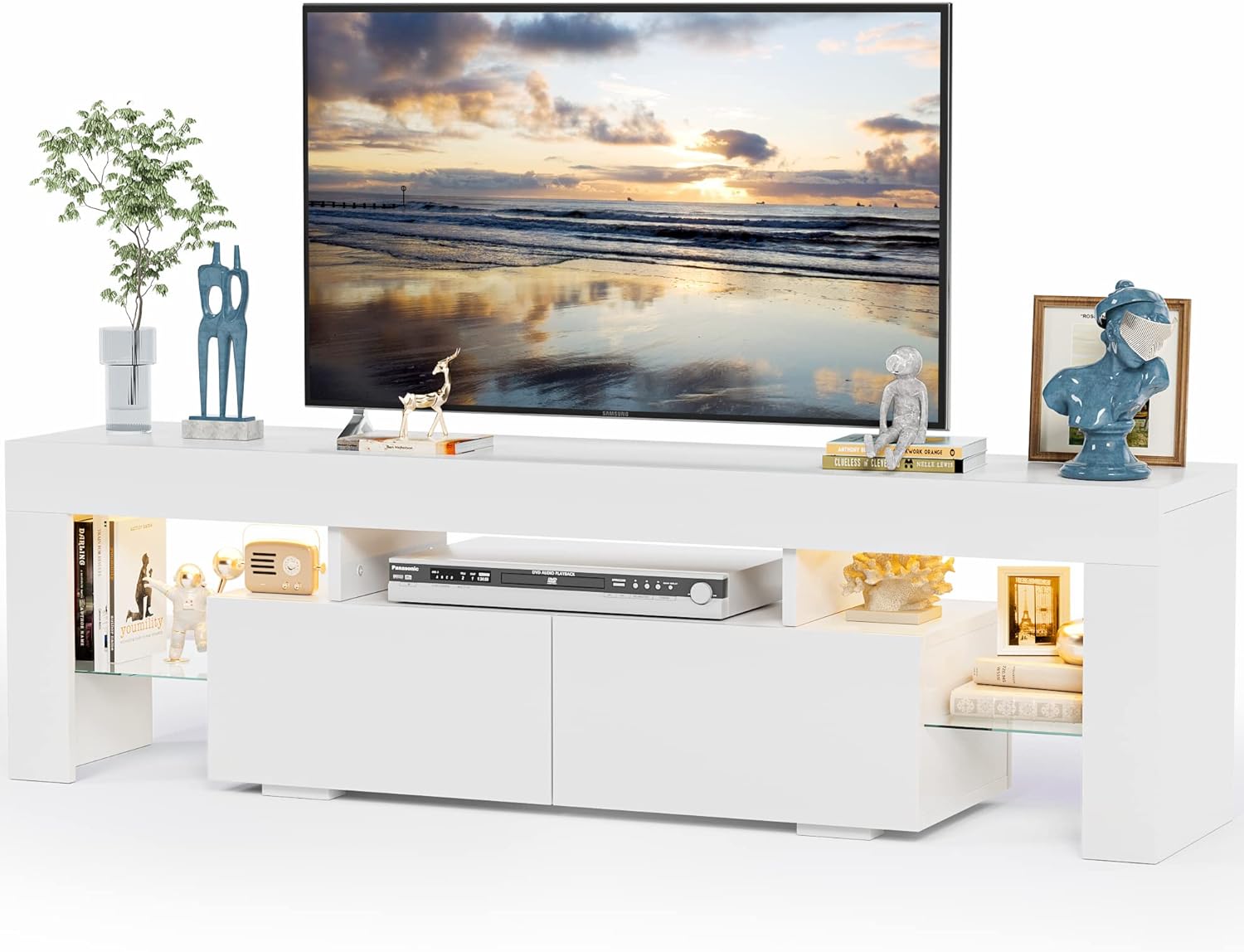
- Bookshelves that double as entertainment centers, storing books and objects alongside the TV rather than requiring a separate media unit
9. Eliminate Decorative Clutter
Small rooms have zero tolerance for surfaces covered in objects. Every item sitting on a coffee table, side table, or shelf is read as visual clutter in a small space; the eye has to process it all, and the cognitive load of many items makes the room feel busy and smaller.
The discipline here isn't minimalism for its own sake. It's editing. Keep:
- One central object on the coffee table (a single vase, a candle, a tray with two or three items grouped tightly)
- Lamp + one decorative object on each side table
- Books and plants on shelves, grouped rather than scattered
Move everything else into storage. In a small room, less is almost always more visible, meaning your nicest things read more clearly when they're not competing with a roomful of other objects.
10. Maximize Natural Light Ruthlessly
Natural light makes small rooms feel dramatically more spacious. Anything that blocks it should be removed or reduced. Practical steps:
- Keep window sills clear of objects that block light
- Choose sheer or light-filtering window treatments instead of heavy drapes (or hang them flanking the window rather than covering it)
- Position mirrors to reflect the window back into the room
- Trim any hedges or overgrown plants blocking window light from outside
- Clean your windows, a genuinely meaningful step that's often overlooked
If your room has limited natural light, artificial layered lighting (as covered in our complete lighting layering guide) compensates significantly. A well-lit room at 10pm can feel just as open as a daylit room at noon if the lighting is layered thoughtfully.
11. Float Furniture Away from the Walls
The instinctive response to a small room is to push all the furniture against the walls to "open up" the center. This actually makes rooms feel smaller, not larger, because it creates a vast empty space in the middle that reads as awkward rather than spacious.
Counter-intuitively, pulling furniture slightly away from the walls, even just 4 to 6 inches, which creates a sense of breathing room and makes the arrangement feel more deliberate. The small gap between the sofa back and the wall reads as intentional placement rather than storage-against-a-wall.
Anchor the floating arrangement with a properly sized area rug. In small rooms, a 6×9 or 8×10 rug unifies the furniture grouping and reinforces the intention of the arrangement. The front legs of each major piece should sit on the rug.
12. Use Paint and Color Strategically
Light walls in small rooms are the general rule, and it holds for good reason. Light colors reflect available light back into the room; dark colors absorb it. A small room with dark walls can feel cozy and intimate if that's the goal, but it will feel smaller, not larger.
For the maximum sense of space, paint walls, ceiling, and trim in the same pale tone (or closely related tones). The absence of visual contrast between wall and ceiling removes the room's "lid" and makes it feel taller.
If you want to introduce a deeper accent color (a feature wall, an accent chair), put it on the wall farthest from the room's entrance. This draws the eye deeper into the space, creating a sense of depth and dimension that makes the room feel longer.
Putting It Together: A Small Living Room Framework
Combining these strategies doesn't require doing all twelve simultaneously. A practical sequence for transforming a small living room:
- First: Assess and declutter. Strip the room to only what's essential and genuinely beautiful. This alone changes everything.
- Second: Audit the furniture scale. Remove or replace anything that's too large for the room.
- Third: Add a large mirror opposite or adjacent to the main window.
- Fourth: Hang curtains high and wide, and re-examine your lighting layers.
- Fifth: Choose a cohesive palette and apply it to any new purchases (accent chair, throw pillows, curtains).
Done in this order, the effect of each step is visible and motivating before the next begins. By step five, the room will feel transformed, not because it's larger, but because it finally feels fully intentional.
Small spaces reward careful, thoughtful design more than large ones do. Every decision counts. That constraint, approached correctly, is less a limitation and more an invitation to get better at the craft of making a home.