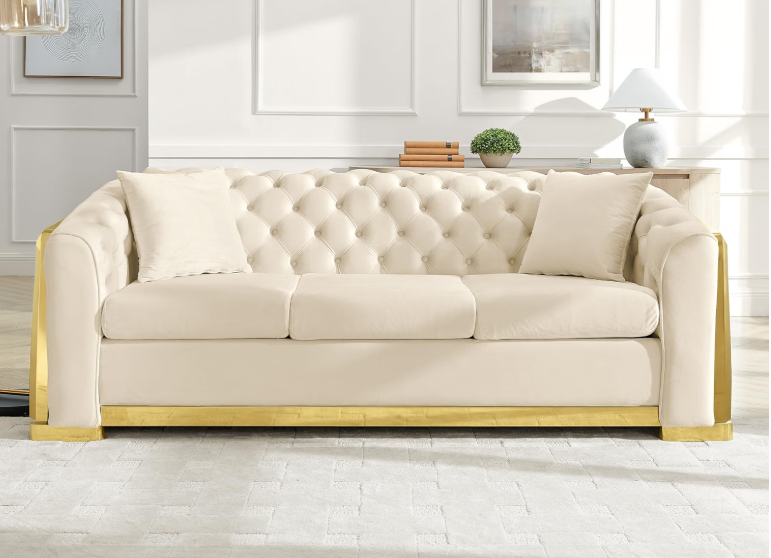
A sofa is one of the biggest furniture purchases you can make, and it has a major effect on how your living room looks and feels. It needs to be comfortable enough for everyday life, attractive enough to anchor the room, and well made enough to hold up over time.
That is especially true when you are shopping for a luxury sofa. A higher price does not automatically mean better quality. The best sofa for your home is the one that fits your space, suits the way you actually live, and has the construction and materials to justify the investment.
Before choosing a color or falling for a particular design, start with the practical details. Sofa size, seat depth, frame construction, upholstery, and cushion fill can all make a noticeable difference once the sofa is in your home.
Start With the Size of Your Room
The most expensive sofa in the world will look wrong if it is too large for the room. On the other hand, a sofa that is too small can make a large living room feel unfinished.
Measure the room before you start shopping. Record the width of the wall where the sofa will sit, the available depth, and the location of doors, windows, heating vents, and walkways. It is also worth measuring the entry door, stairways, and hallways the sofa will have to pass through.
A standard three-seat sofa is often around 71 to 86 inches wide, although larger designs can go well beyond that. Overall sofa depth commonly falls in the 32 to 40 inch range, while deeper lounge-style sofas can take up considerably more space.
One of the easiest ways to check the scale is to mark the sofa footprint on the floor with painter's tape. This gives you a much better sense of how the piece will feel in the room than looking at dimensions on a product page.
Think About Traffic Flow
Your sofa should not force everyone to squeeze around it. Leave enough room for people to move comfortably between seating, tables, doors, and other parts of the room.
As a practical starting point, aim for roughly 30 inches of clear walking space in the main traffic areas. Exact measurements will depend on your layout, but the general rule is simple: the sofa should define the room without blocking it.
Choose the Right Sofa Shape
Once you know how much space you have, consider the shape that makes the most sense for the way you use the room.
Traditional Sofa
A standard sofa is the most flexible option for many living rooms. It works well against a wall, across from a television, or as part of a conversation area with accent chairs.
This is a good choice when you want a classic look that can adapt as your furniture changes.
Sectional Sofa
A sectional can provide generous seating and works particularly well in larger rooms or open-concept spaces. It can also help define a living area without the need for a dividing wall.
Before buying a sectional, check the exact dimensions of every section. Pay attention to whether the chaise or corner configuration is fixed, reversible, or modular. A sectional that looks perfect online can become awkward if the orientation does not work with your room.
Curved Sofa
Curved sofas have become a popular choice for elevated living rooms because they create a softer, more sculptural look. They are particularly effective when the room is designed around conversation rather than a television.
They also need more planning than a traditional straight sofa. A curved design typically works best when it has enough open space around it to be appreciated from multiple angles.
Apartment or Compact Sofa
A smaller sofa is not only for small apartments. Compact designs can be useful in reading rooms, guest rooms, home offices, or larger spaces where you want several separate seating areas.
The key is to maintain the right proportions. A smaller sofa can still feel luxurious when the upholstery, silhouette, materials, and surrounding furniture are carefully chosen.
Pay Attention to Seat Depth and Height
Two sofas can have almost identical exterior dimensions and feel completely different once you sit down. That is why seat depth and seat height deserve as much attention as the overall width.
For everyday upright sitting, a seat depth around 20 to 25 inches is common. Deeper seats can be more comfortable for lounging, reading, or stretching out, but they may feel less supportive if you prefer to sit upright.
Seat height often falls around 17 to 18 inches. Taller users may prefer a slightly higher seat, while shorter users often find lower seats easier to use.
Think about how you actually spend time on the sofa. Do you sit upright and talk with guests? Watch movies for hours? Read? Take afternoon naps? Your answer can help determine whether you should prioritize a supportive standard-depth sofa or a deep, relaxed design.
Look Beyond the Upholstery
Luxury is not just about what a sofa looks like. Much of the value is hidden inside the piece.
A quality sofa should have a sturdy frame that feels solid rather than lightweight or flimsy. Hardwood and well-engineered structural materials are common choices in higher-quality furniture. The frame should also be properly joined and reinforced at key stress points.
The suspension system matters as well. Sinuous springs, webbing systems, and other suspension methods can all work well when properly designed and constructed. What matters most is how well the system supports the cushions and holds up to regular use.
When shopping online, look for detailed construction information rather than relying only on phrases such as "premium" or "luxury." Product pages that explain the frame, suspension, cushion fill, and upholstery give you much more useful information than marketing language alone.
Choose the Right Cushion Fill
Cushion construction has a major impact on comfort and maintenance.
- High-density foam: Provides a supportive feel and generally holds its shape well.
- Down or feather: Creates a soft, relaxed feel but usually requires more regular fluffing.
- Foam and down blends: Offer a balance between structure and softness and are common in higher-end seating.
- Memory foam: Can provide a more contouring feel, although it is not the best match for everyone.
There is no single "best" cushion fill. A formal living room may benefit from a more structured cushion, while a family room designed for long movie nights may call for something softer and deeper.
Fabric vs. Leather: Which Is Better for a Luxury Sofa?
The right upholstery depends on your lifestyle as much as your design preferences.
Fabric Sofas
Fabric gives you the widest range of colors, textures, and patterns. Linen blends, performance fabrics, velvet, chenille, and other upholstery materials can all create a very different look.
For homes with children, pets, or heavy daily use, look for durable upholstery designed for regular wear. Removable covers can also be useful when available.
Performance fabrics are worth considering when you want the look of a high-end upholstered sofa with easier day-to-day maintenance. Always check the manufacturer's cleaning instructions before buying.
Leather Sofas
Leather offers a timeless appearance and can work beautifully in both traditional and modern interiors. High-quality leather also develops character over time rather than simply looking worn out.
Keep in mind that different leather grades and finishes behave differently. A protected leather may be easier to maintain, while a more natural finish can develop a richer patina but require more care.
For a luxury purchase, pay attention to the specific upholstery description rather than assuming all leather sofas are equivalent.
Pick a Color You Can Live With
The color of your sofa should work with the room you have now, but it is also worth thinking about how the space may change later.
Neutral colors such as cream, beige, gray, taupe, and warm brown are popular because they are easy to pair with rugs, lighting, accent chairs, and decorative accessories. They also give you more flexibility when you want to refresh the room without replacing the sofa.
That does not mean a neutral sofa is always the best choice. A deep green, navy, rust, or other rich shade can make a luxury sofa the focal point of the room. The important thing is to make the color feel intentional.
If you are investing in a more expensive sofa, consider whether you want the upholstery to be the main statement or the foundation for other pieces in the room.
Consider the Sofa's Relationship With Your Other Furniture
A sofa rarely stands alone. Before buying, think about the coffee table, accent chairs, rug, lighting, and entertainment center that will surround it.
Scale matters. A deep luxury sofa paired with a tiny coffee table can look unbalanced, while a large sectional may need a substantial rug and larger side tables to feel properly grounded.
This is also where lighting plays a role. A beautiful sofa can look flat under a single overhead fixture. Layered lighting, including floor lamps, table lamps, and ambient lighting, can make the upholstery and shape much more noticeable.
For more help coordinating a living room, see our guides on living room decor, accent chairs, and layered lighting.
How Much Should You Spend on a Luxury Sofa?
Luxury sofas can range from a few thousand dollars to considerably more depending on the materials, construction, brand, customization, and craftsmanship.
Rather than choosing a sofa based only on price, compare what you are actually getting for the money. Look at the frame, suspension, cushion materials, upholstery, warranty, delivery policy, and customization options.
A sofa with a higher upfront cost can make sense when it offers substantially better construction and materials. At the same time, an expensive designer name does not automatically guarantee a better-built sofa.
For an affiliate purchase, this is one of the most useful comparisons to make. Look past the product photos and compare the details that affect everyday use.
Questions to Ask Before Buying a Luxury Sofa
Before placing your order, make sure you can answer these questions:
- What are the exact overall dimensions?
- Will it fit through every doorway, hallway, and stairway?
- What are the seat height and seat depth?
- What is the frame made from?
- What type of suspension does it use?
- What is inside the seat and back cushions?
- How durable is the upholstery?
- How should the fabric or leather be cleaned?
- Are the cushions removable or reversible?
- What does the warranty cover?
- What are the shipping and return policies?
- Does the sofa require assembly?
These questions are especially important when buying online, where you cannot sit on the sofa or inspect it in person before ordering.
The Best Luxury Sofa Is the One That Fits Your Life
Choosing a luxury sofa is less about finding the most expensive or eye-catching option and more about finding the right combination of size, comfort, construction, and style.
Measure your room first. Decide how you actually use the space. Pay attention to seat depth, cushion fill, frame construction, and upholstery before making a decision. Then choose the shape and color that fit the look you want.
When you approach the purchase in that order, it becomes much easier to separate a sofa that simply looks luxurious from one that is genuinely well suited to your home.