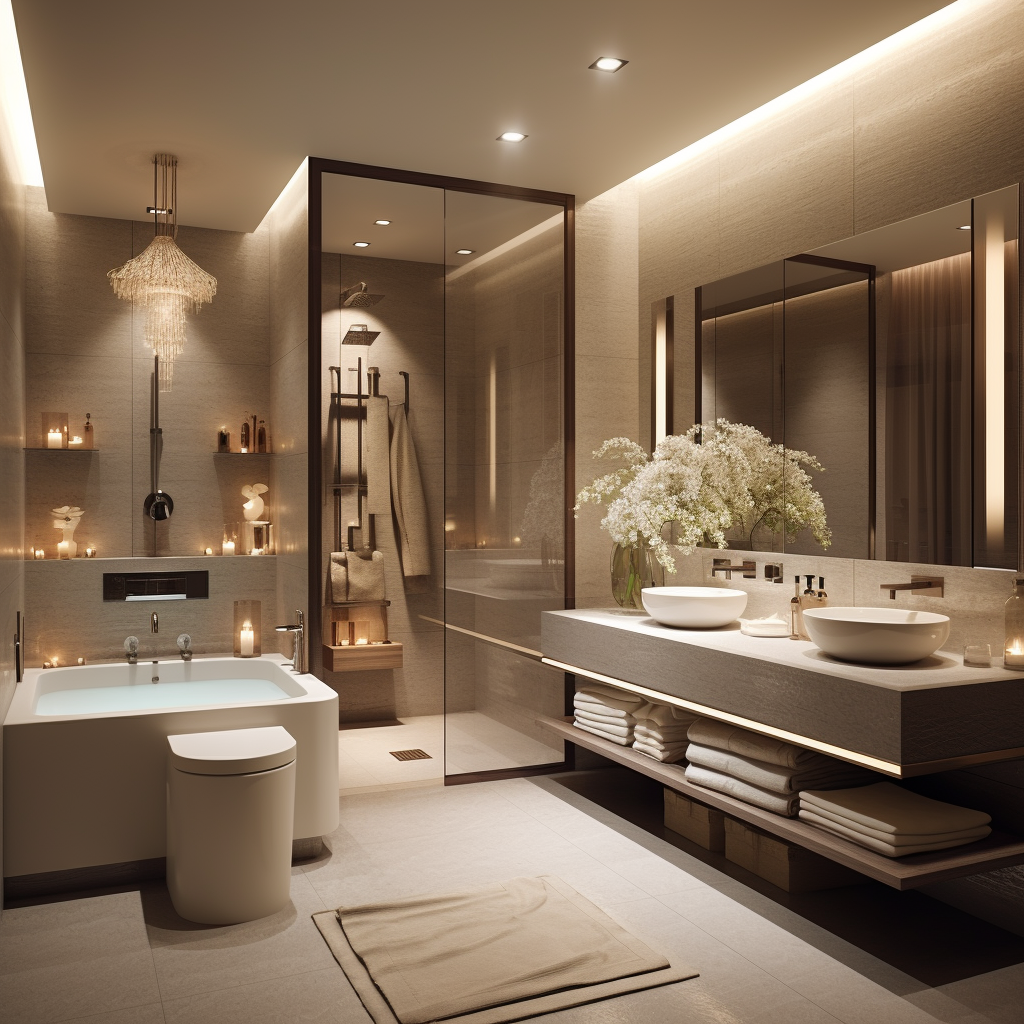
The bathroom is where the day begins and ends. Five minutes in a well-organized bathroom is a genuinely different experience from five minutes in a cluttered one, and the difference is not cosmetic. Organization in the bathroom is the foundation of good bathroom design, not a separate consideration layered on top of it. No amount of beautiful tile or statement lighting compensates for a shower shelf that looks like a shampoo graveyard or a vanity drawer that requires excavation to find a hair tie.
The ten strategies below address every zone of the bathroom, from the shower to the vanity to the floor, with specific product recommendations and the reasoning behind each one. Most can be implemented without drilling, without a contractor, and without a renovation budget. If you are working toward a full bathroom transformation, see our luxury bathroom decor guide for the design layer that sits on top of what is covered here.
1. The Shower: Build a System, Not a Shelf
Every bathroom has a chaos epicenter, and in most homes it is the shower. Bottles lined up on the tub ledge, a bar of soap dissolving in standing water, a razor that migrates across three corners of the floor: the fundamental problem is not the number of products but the absence of a stable, designated home for each one.
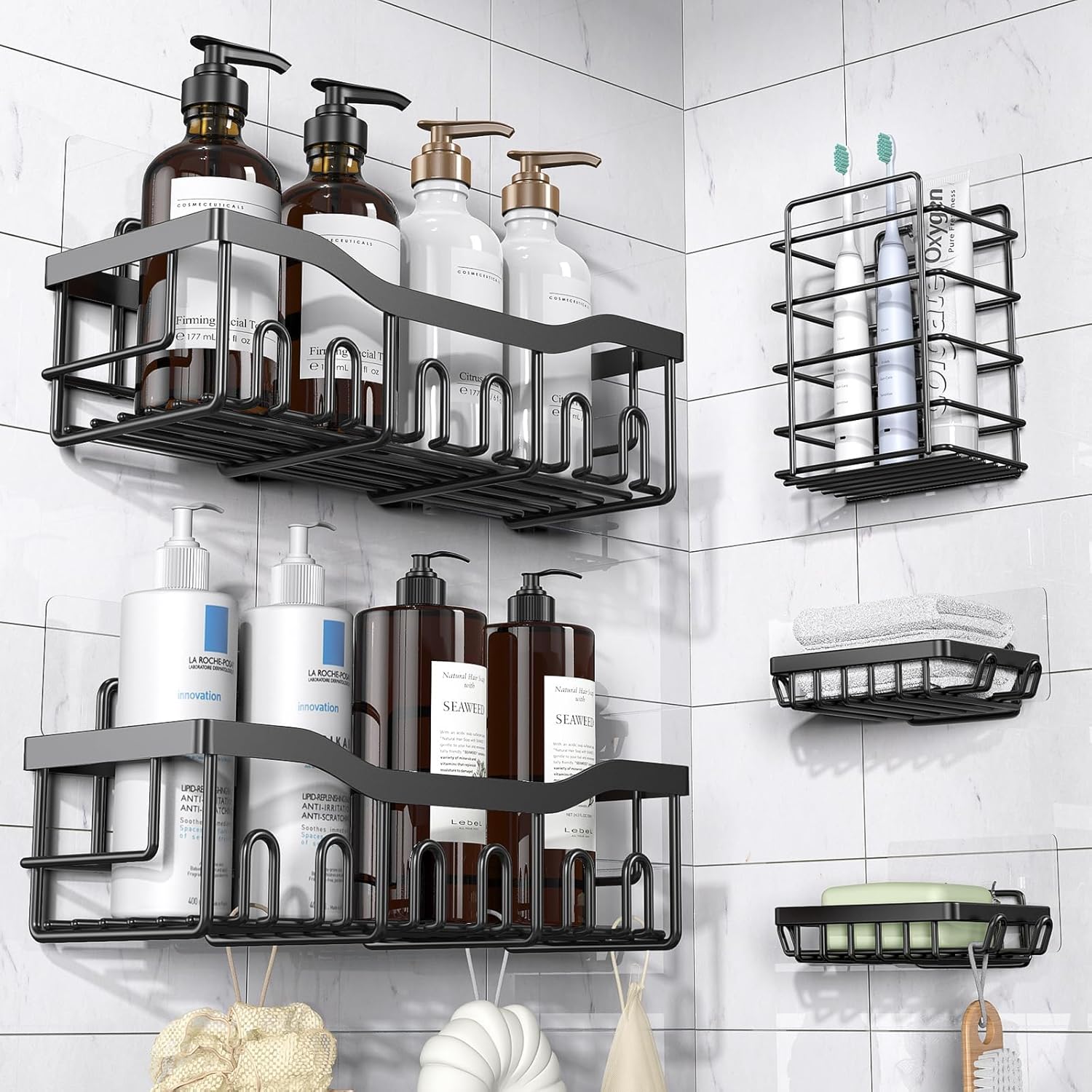
An adhesive shower caddy solves this without drilling into tile. The EUDELE Adhesive Shower Caddy mounts to any tile, glass, or acrylic surface using industrial-strength adhesive pads rather than screws or grout anchors. It holds an entire daily routine's worth of products in a vertical configuration that keeps everything off the floor and ledge, cutting visible clutter immediately. The rust-resistant construction and removable shelf components mean it adapts as the contents of the routine change.
For a cohesive look, use one well-positioned caddy rather than multiple small ones at different heights. Consistency of positioning reads as organized intention rather than accumulated improvisation.
2. Non-Slip Safety That Does Not Compromise the Room
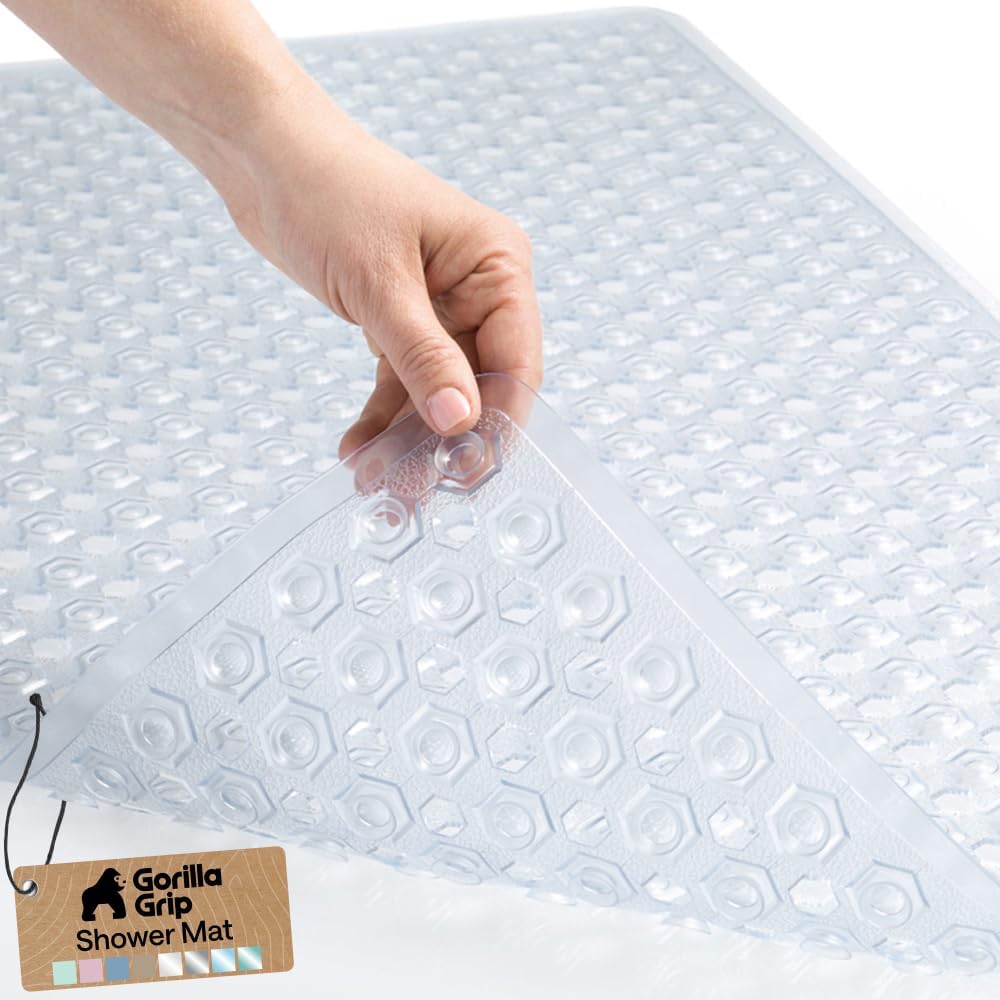
A shower mat is typically chosen purely for function, with no consideration for how it integrates with the room. The result is a bathroom where the mat works against the rest of the design. The Gorilla Grip Shower Mat Bathtub Liner closes this gap: the textured surface creates genuine grip on wet surfaces, the drainage holes prevent water pooling and the mold growth that follows, and the clean, unfussy profile does not call attention to itself. A good functional accessory in a designed space earns its place by doing its job quietly.
3. The Bath Rug: Anchor the Vanity Zone
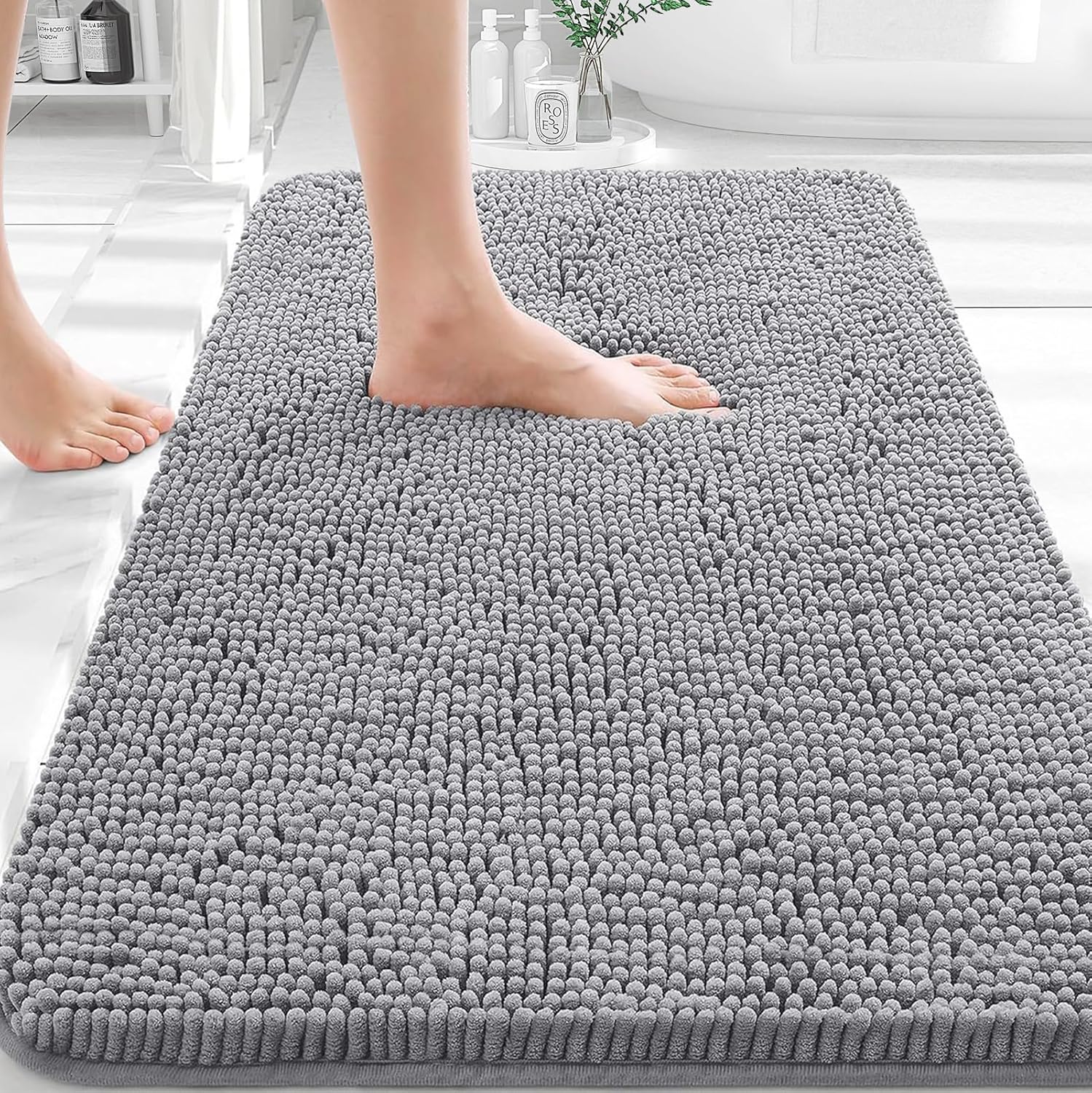
The area directly outside the shower is where morning and evening bathroom routines converge. A quality bath rug absorbs moisture, provides warmth underfoot on cold mornings, and creates a visual definition of the bath zone in the same way an area rug defines a seating group in a living room. Without one, the transition from shower to vanity feels unfinished.
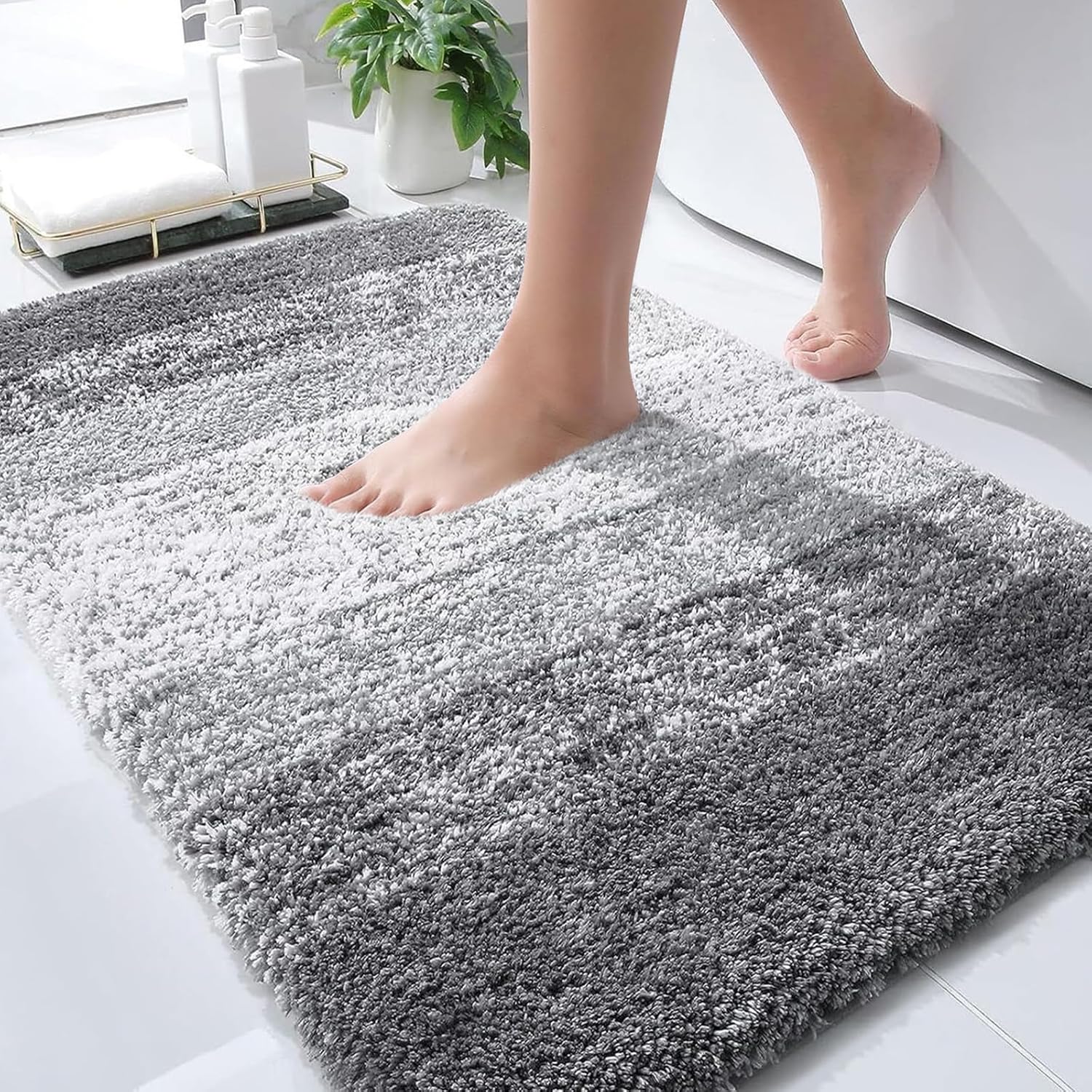
The OLANLY Bathroom Rug is a strong choice for this position: the absorbent construction handles genuine post-shower moisture without becoming waterlogged, the non-slip backing keeps it positioned on tile floors, and the neutral tones integrate with virtually any bathroom palette. For a softer, spa-adjacent feel, the OLANLY Microfiber Bathroom Rug provides a plushier surface that suits bathrooms where comfort underfoot is a priority. Layer both for the hotel-bathroom look: one at the shower exit, one at the vanity.
4. Shower Hooks: Accessible Storage Without Permanent Installation
Robes, towels, loofahs, back brushes: all of them need a designated home in the shower or immediately adjacent to it. Standard towel bars positioned across the room force a cold walk after every shower. Hooks placed on the shower wall or on tiles just outside it put what you need within reach without any permanent installation.
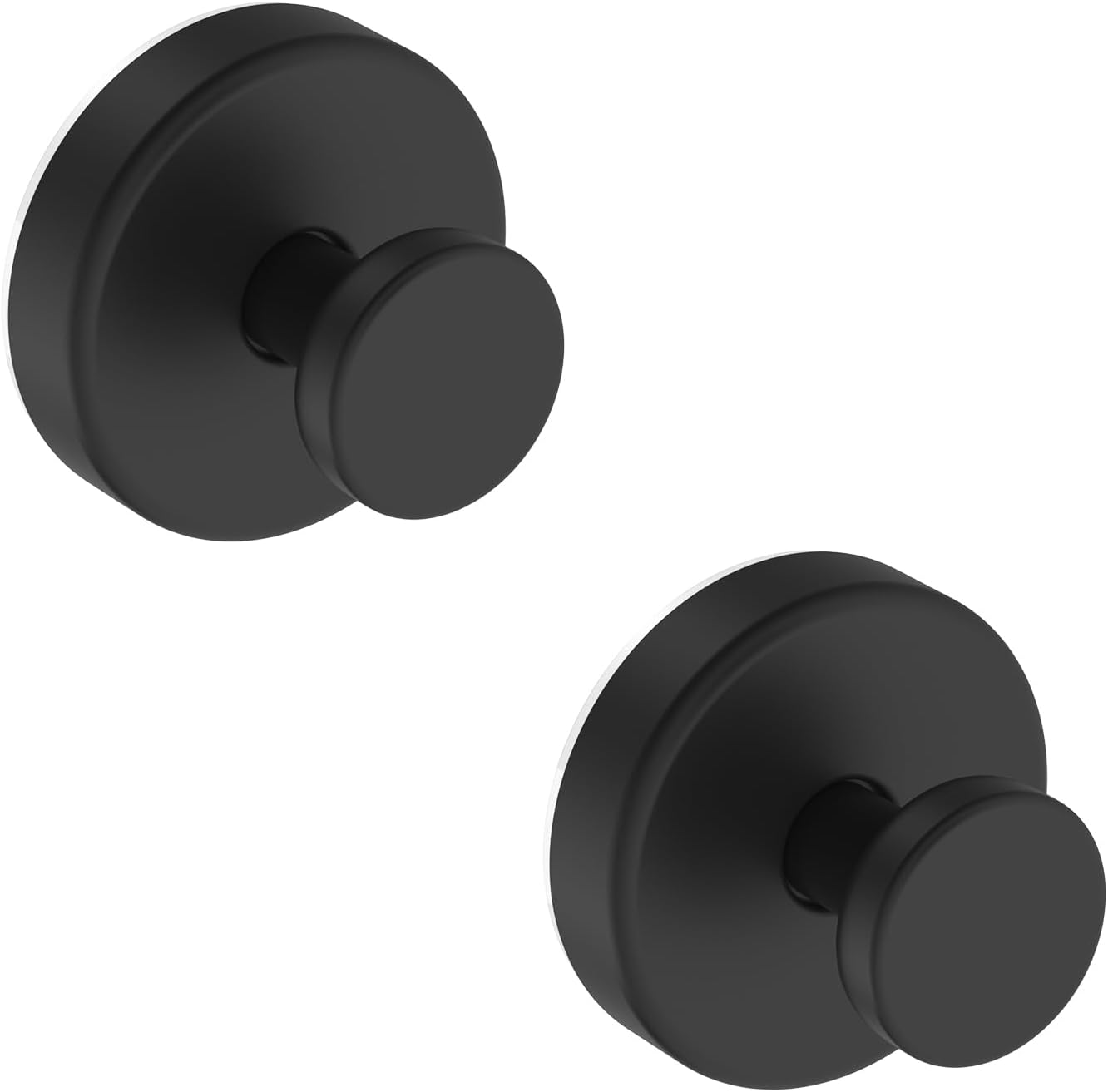
The Bntuk Suction Cup Hooks for Shower attach firmly to any smooth surface with no drilling required and release cleanly when repositioning is needed. Place them at comfortable heights inside the shower for loofahs and back brushes, and one set just outside for the towel used immediately after stepping out. This placement eliminates the wet-floor scramble that comes from keeping towels at a distance.
5. Towel Storage: Give Every Towel a Fixed Home
Towels are among the most common visual disruptors in bathrooms. A towel draped over the toilet tank, looped through a door handle, or folded and stacked on a flat surface reads as a room that is managed reactively rather than intentionally. Proper towel storage creates a fixed, visible location for each towel, signals that the space is organized, and allows towels to air between uses, which is a hygiene consideration as much as an aesthetic one.
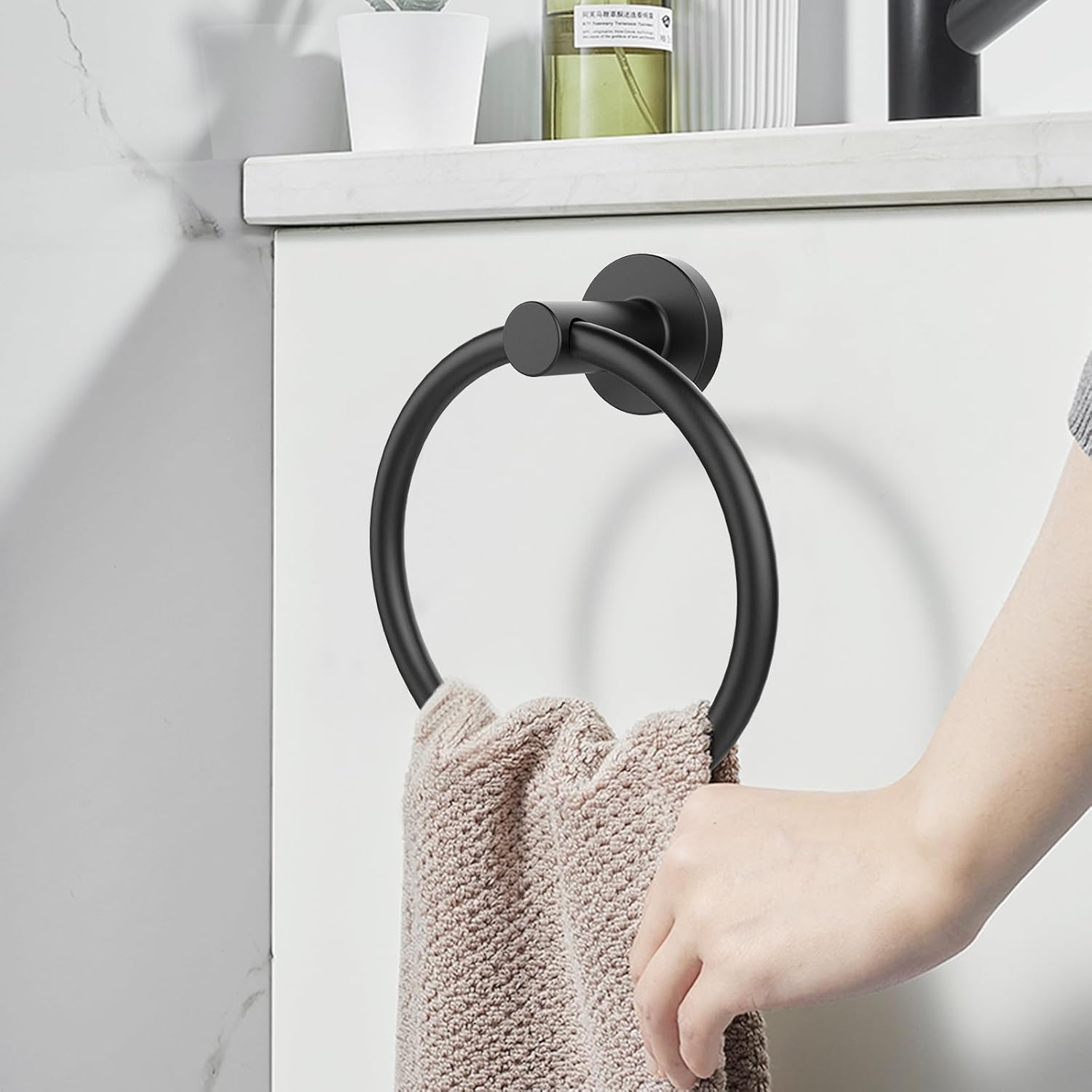
The SetSail Towel Holder provides a dedicated hanging position without requiring wall mounting. The freestanding design works beside the sink, next to the shower, or in any position that suits the room layout. For bathrooms where the wall space exists and the location is settled, a wall-mounted bar at 48 inches from the floor allows towels to hang fully extended and air properly between uses.
6. Drawer Organizers: The Upgrade You Cannot See But Will Use Every Day
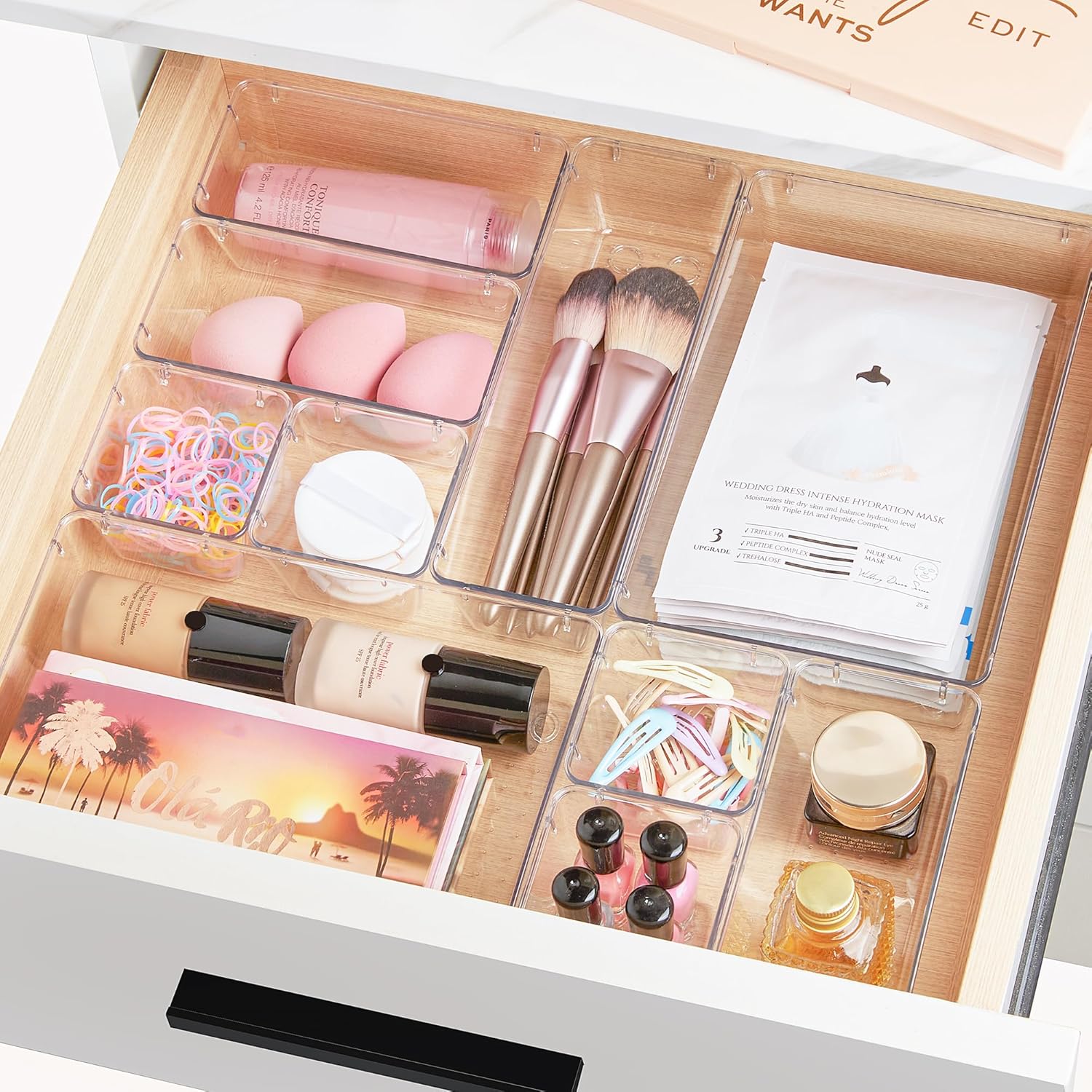
The bathroom vanity drawer is a reliably chaotic space in most homes. Makeup, medication, cotton rounds, bobby pins, hair ties, and cables for electric toothbrushes accumulate without structure into a drawer that takes ten seconds to search and creates low-grade daily frustration. The fix is inexpensive and immediate.
The VTOPMART 25-Piece Drawer Organizer Set provides a full set of modular trays in multiple sizes that fit together inside a standard vanity drawer. Dedicating one slot per category (cotton rounds, makeup brushes, medications, hair accessories) creates a drawer you can read at a glance rather than rummage through. The time saved over a year of daily use is substantial, and the sense of control an organized drawer provides each morning is worth considerably more than the cost of the set.
7. Laundry Without Visual Intrusion
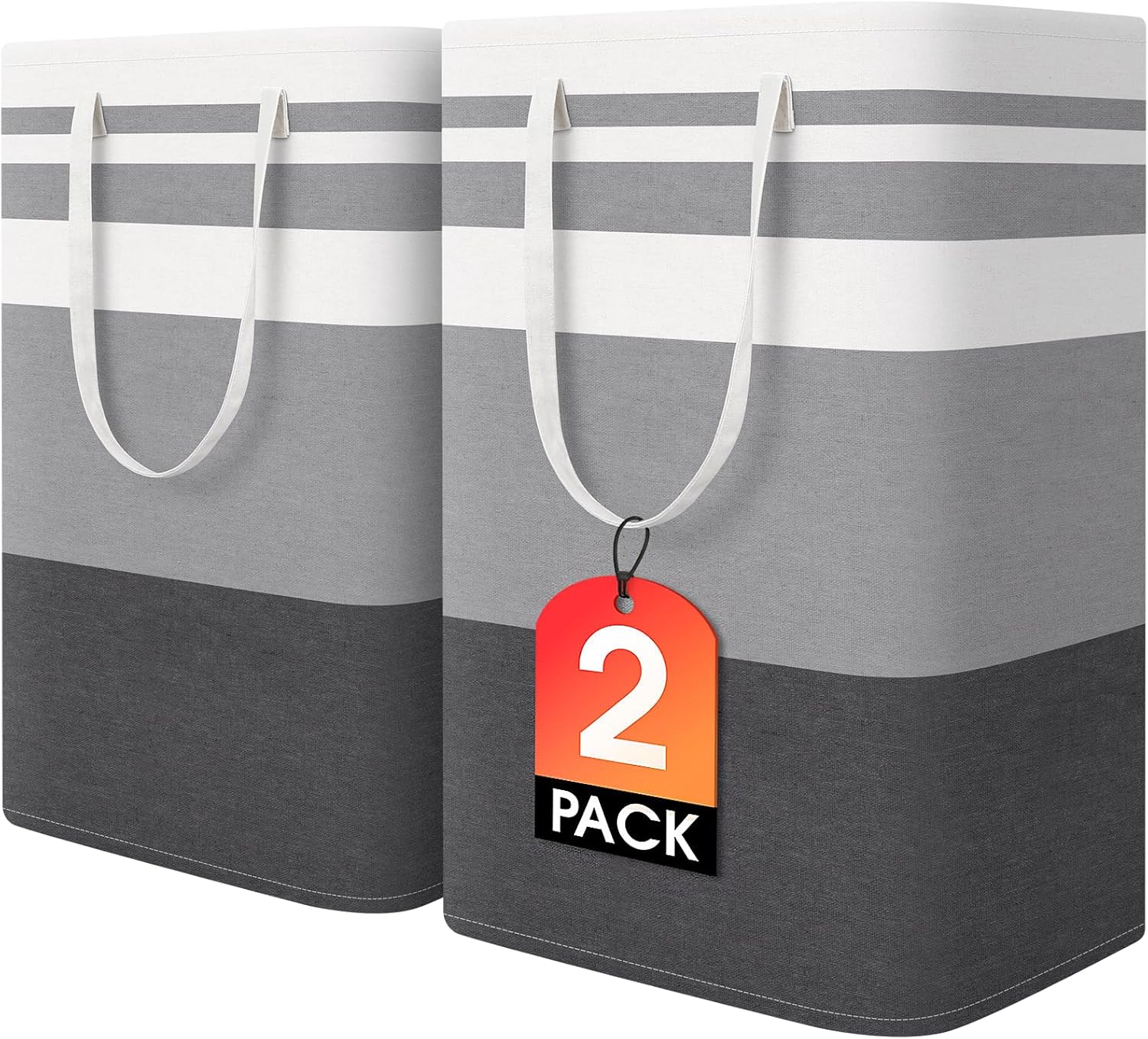
One of the most common visual disruptions in a bathroom is the laundry basket. An overflowing basket in a corner works against the calm that the rest of the room's organization is designed to create. The HomeHacks 2-Pack Laundry Baskets address this with a collapsible construction that collapses flat when empty and expands only as needed. The lightweight material and carry handles make transport to the laundry room simple. Keeping two, one for lights and one for darks, eliminates the sorting step at wash time and makes a small organizational task disappear entirely.
8. The Toilet Zone: A Neglected Area Worth Addressing
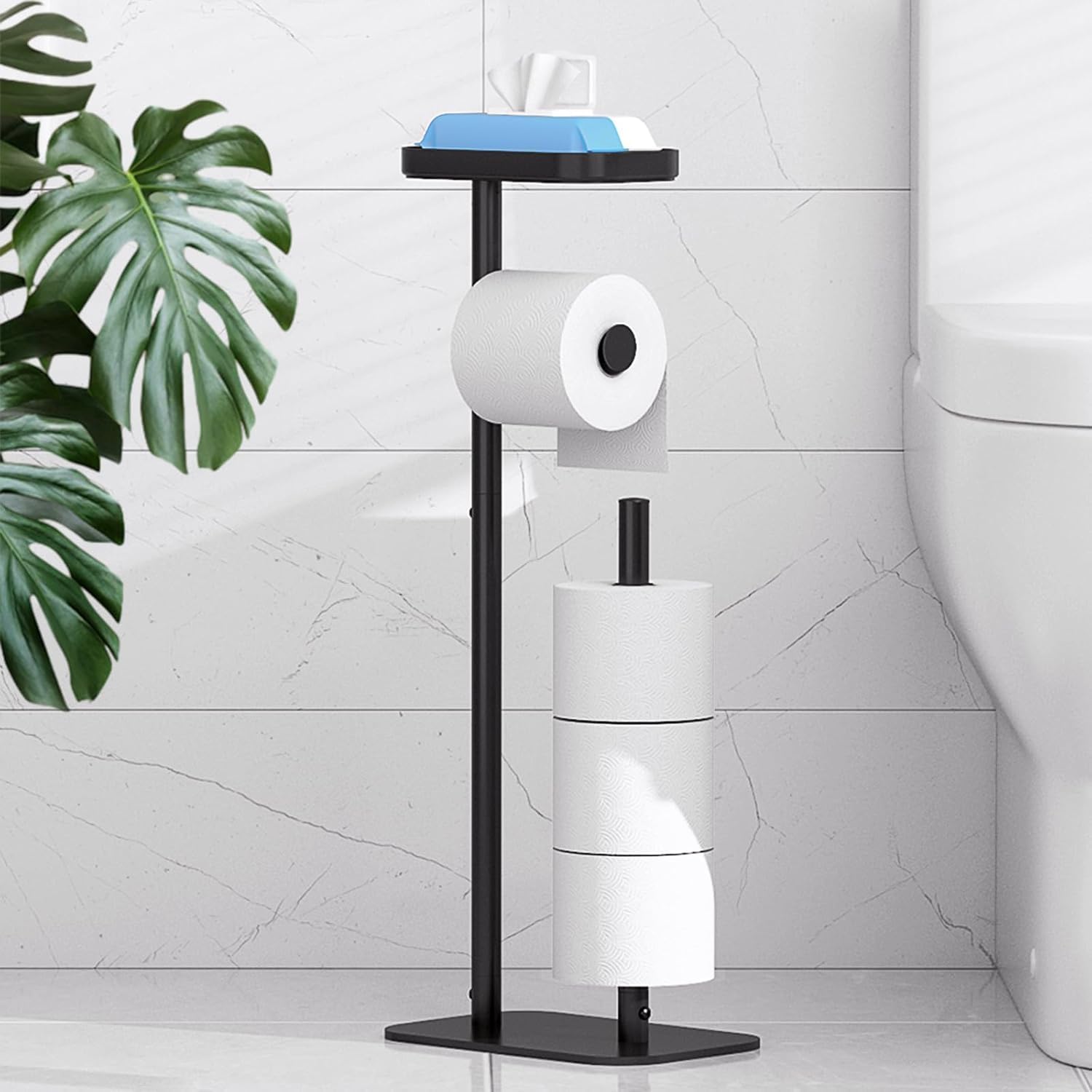
The area around the toilet is frequently the least considered zone in bathroom design. A spare roll balanced on the tank lid, nothing for a backup supply, no fixed position for anything: this zone reads as reactive rather than intentional. A freestanding toilet paper holder resolves the most visible problem immediately.
The Kitsure Freestanding Toilet Paper Holder provides storage for the current roll and several spares in a self-contained unit that requires no installation and stands cleanly beside the toilet without occupying floor space that could not otherwise be used. It turns a zone typically defined by improvised arrangements into one with a tidy, permanent solution.
9. The Trash Can: Size and Placement Matter More Than You Think
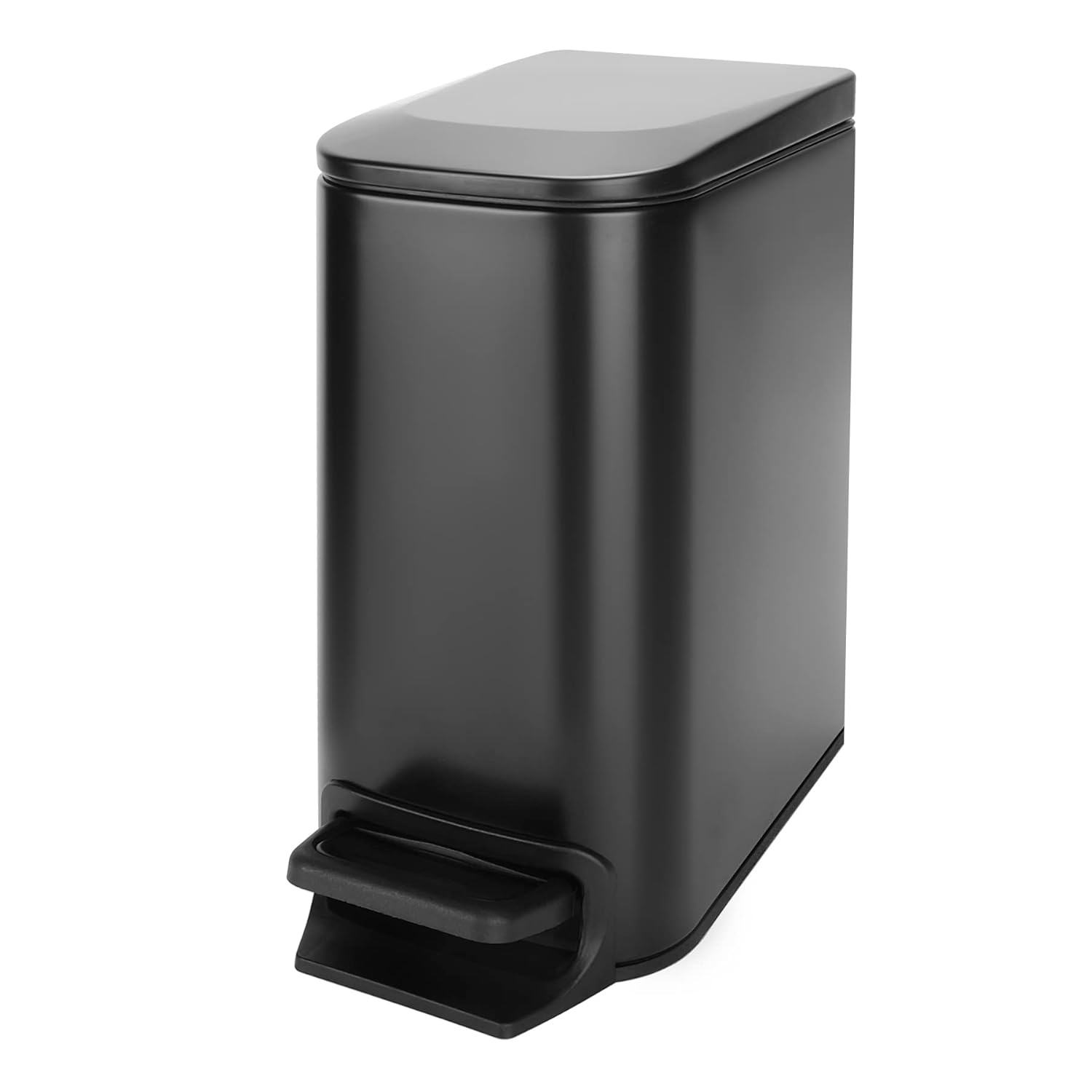
Every bathroom needs a trash can, and almost every bathroom has one that is either too large, visually intrusive, or overflowing before the week is out. The Cesun Bathroom Trash Can solves the size problem directly: the 1.3-gallon capacity handles realistic daily use without being so large that it becomes a piece of furniture in a small space. The slim profile fits neatly under the vanity or beside the toilet. Keeping the bin on the smaller side also encourages more frequent emptying, which maintains the room's cleanliness without requiring a deliberate routine.
10. The Vanity Counter: Curate Rather Than Accumulate
The vanity counter is the face of the bathroom. It is the surface your eye goes to first when entering and last when leaving. More than any other flat surface in the home, it tends to accumulate objects faster than available space can absorb them.
The working principle here is the same as for a nightstand or a kitchen counter: every item on the surface should be either beautiful, actively used daily, or both. Products used less than daily belong in a drawer or a cabinet. The surface itself becomes the display, and what sits on it should be deliberate enough to earn that visibility.
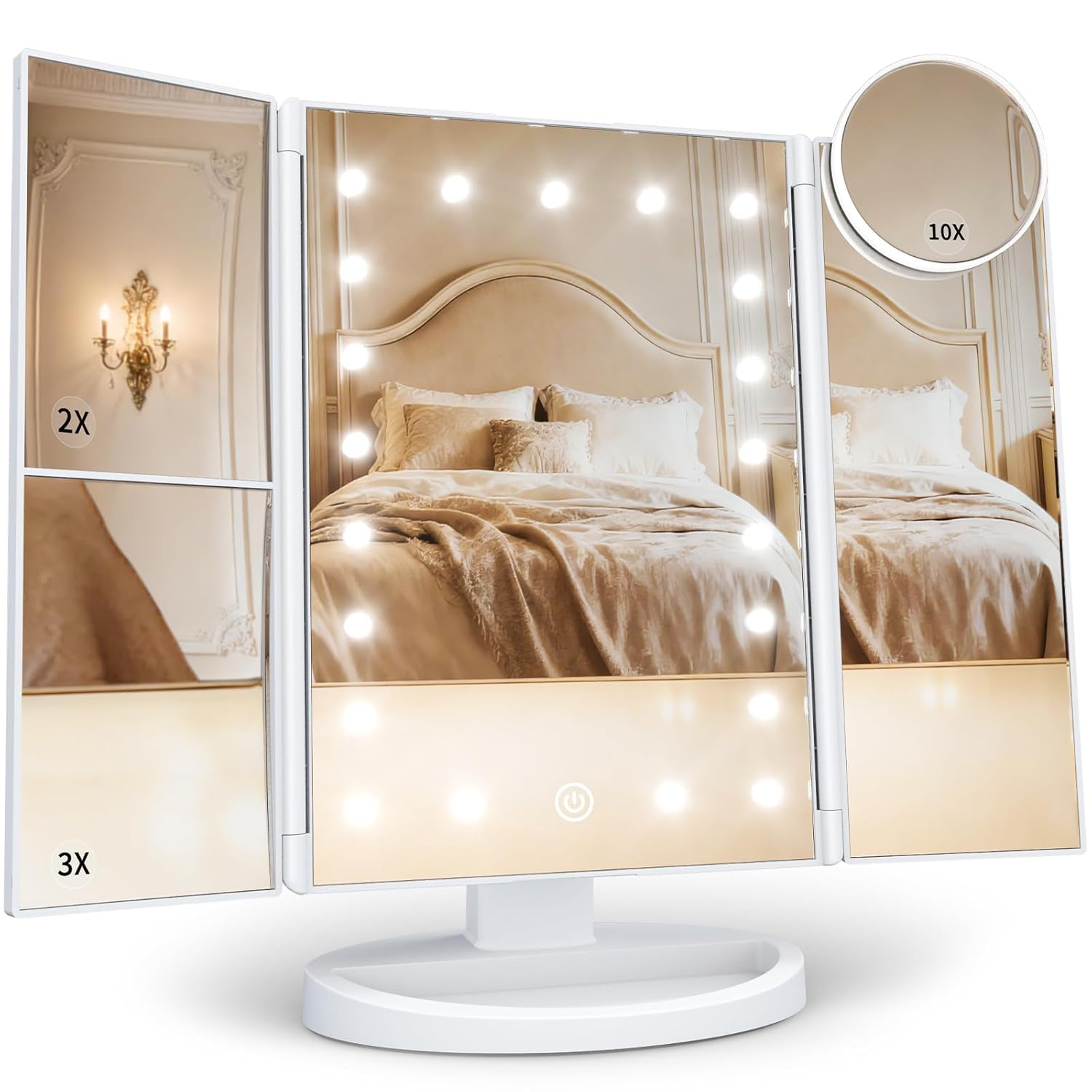
A quality vanity mirror elevates the counter while serving an obvious daily function. The HUONUL Makeup Mirror Vanity provides magnification and proper illumination for grooming at a scale that earns its place on the counter. Its own warm glow contributes a small accent light to the room's atmosphere, which matters especially in bathrooms where a single overhead fixture is the only light source. For more on bathroom lighting design, see our complete layered lighting guide.
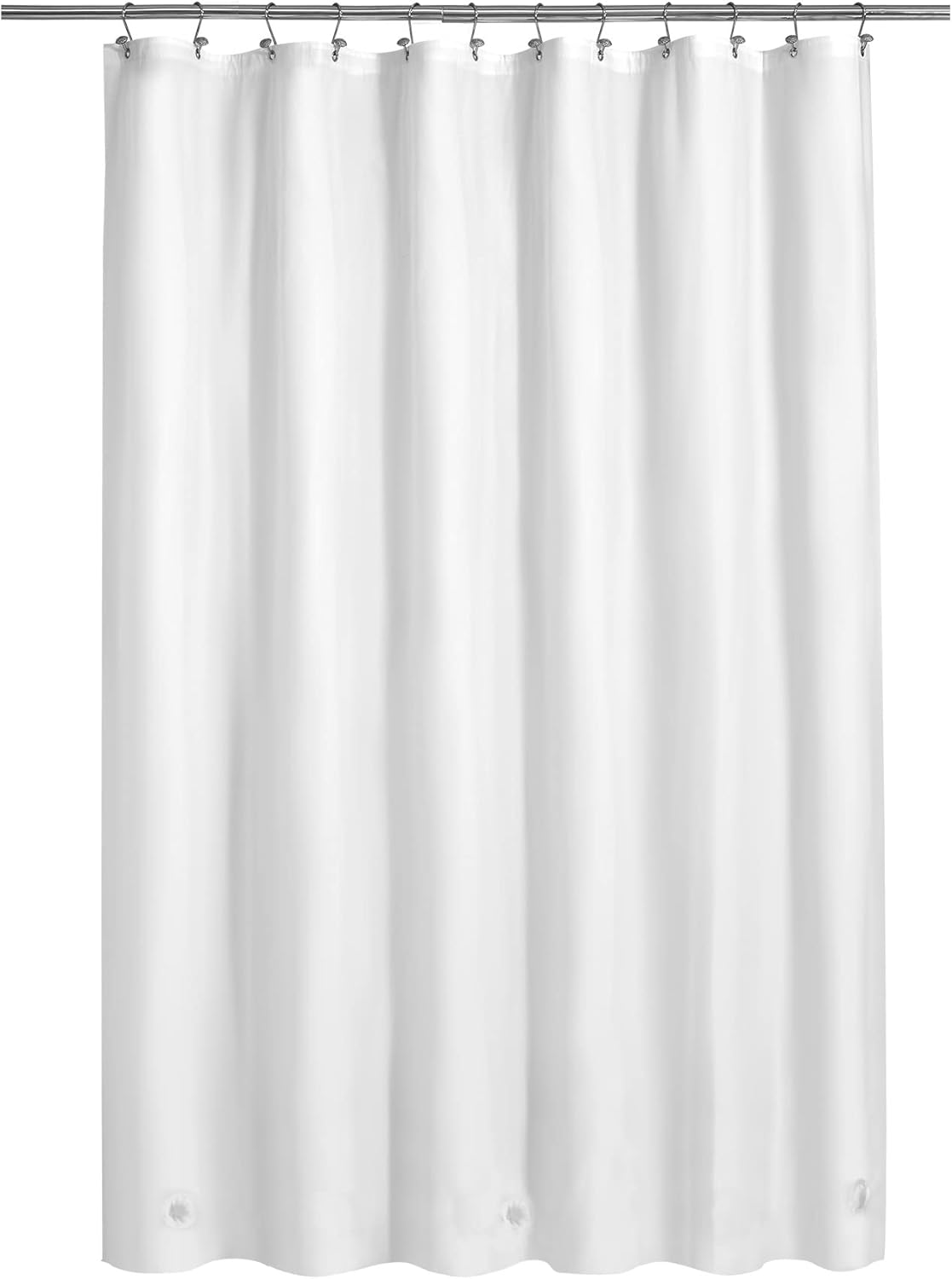
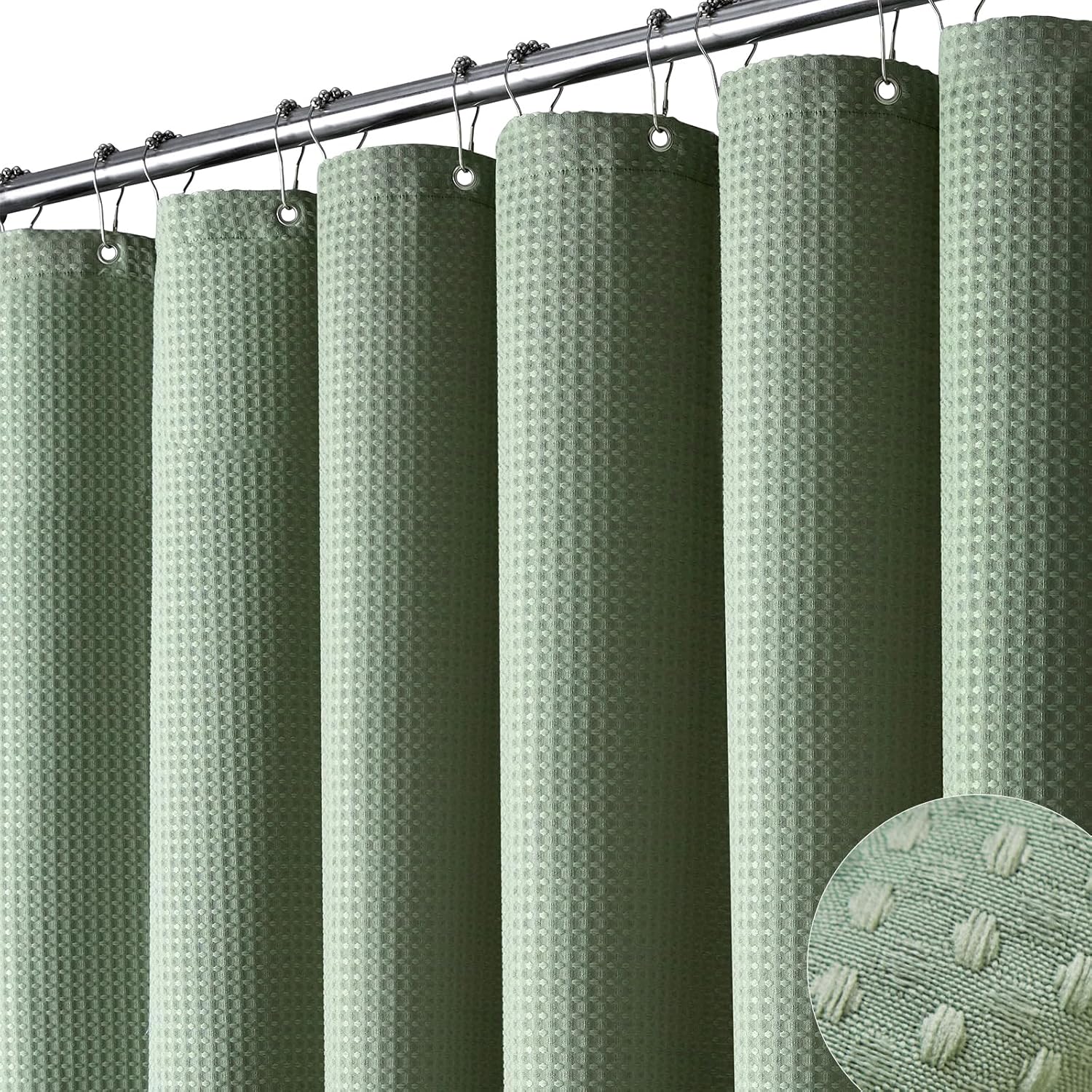
The shower curtain, if the bathroom has one, carries visual weight proportionate to its size. A well-chosen curtain makes the shower zone feel like a considered design decision rather than a functional enclosure. The Dynamene Waffle Shower Curtain brings a textured, spa-adjacent aesthetic that elevates the room with minimal effort and cost. Pair it with the Barossa Design Shower Curtain Liner for waterproof function, keeping the decorative curtain clean and dry while the liner handles the water contact. The separation of function from aesthetics is a principle worth applying throughout the bathroom.
A Priority Sequence: Where to Start
If you are starting from a disorganized bathroom and want to see immediate improvement without addressing everything at once, work through this sequence:
- Drawer organizers first. The vanity drawer is the most-used storage in the bathroom. Organizing it takes thirty minutes and immediately reduces daily friction.
- A proper shower caddy second. This is the most visible source of bathroom clutter for most households, and the fix requires no installation.
- A toilet paper holder third. It addresses a neglected zone with minimal cost and no tools required.
- Bath rug and shower mat fourth. These are functional and visual upgrades that transform the floor of the room simultaneously.
- Curate the vanity counter last, once the storage infrastructure is in place. With drawers organized, the counter becomes easier to maintain at a minimal, deliberate state.
Frequently Asked Questions: Bathroom Organization
What is the most common bathroom organization mistake?
Storing too much on the vanity counter. The counter is not storage; it is display. Anything that does not belong on a curated surface belongs in a drawer, a cabinet, or under the sink. Most vanity counter clutter is products used infrequently, backup stock that belongs elsewhere, and items without a designated home in a drawer. Solving the drawer organization problem almost always resolves the counter clutter as a consequence.
How do I make a small bathroom feel more organized?
Reduce what is visible. In a small bathroom, every item on a surface carries outsized visual weight. Store aggressively, display minimally. A shower caddy moves products off the ledge into a contained vertical footprint. A three-item maximum on the vanity counter clears the visual field. A freestanding toilet paper holder replaces the improvised arrangement on the tank. None of these changes make the room larger, but together they make it feel larger by clearing the surfaces the eye lands on. See our small space design guide for principles that translate directly to small bathrooms.
How often should bathroom organization be reset?
A full organization reset, meaning emptying every drawer, discarding expired or unused products, and reassigning storage zones, is worth doing once or twice a year. Day to day, the goal is a system that maintains itself: each item has a fixed home it returns to after use. If things are consistently ending up on the counter or the ledge rather than in their designated places, the system needs adjustment, not more willpower.
Should bathroom towels be folded or rolled?
Both work, but they suit different storage formats. Folded towels stack cleanly on shelves and in linen closets. Rolled towels work better in baskets, on open shelves where the rolled ends face out, and in ladder-style towel racks where a tightly folded towel would appear too formal. In a spa-adjacent bathroom, rolled white or neutral-toned towels in a simple basket add warmth and texture while keeping them accessible. The method matters less than having a method and applying it consistently.
What is the best way to organize the space under the bathroom sink?
Use pull-out bins or a two-tier organizer to make the back of the cabinet reachable without unloading the front. Group items by category rather than by frequency of use: cleaning products together, backup stock together, grooming tools together. Keep the front row for items used most frequently. Label the bins if the cabinet is shared by multiple people. Under-sink storage is out of sight but not out of mind; a disorganized under-sink cabinet creates the same daily friction as a disorganized drawer, just slightly less visible. For guidance on choosing the right vanity size to support this kind of storage, see our bathroom vanity size guide.