A floor lamp is one of the most versatile pieces you can add to any room. It provides light exactly where you need it, operates independently of your ceiling fixtures, and, when well chosen, acts as a genuine piece of furniture in its own right. Yet most people buy floor lamps quickly and without much thought, then wonder why the room still feels flat or poorly lit.
This guide gives you a clear framework for choosing the right floor lamp for every space in your home.
The Five Main Types of Floor Lamps
1. Torchiere Floor Lamps
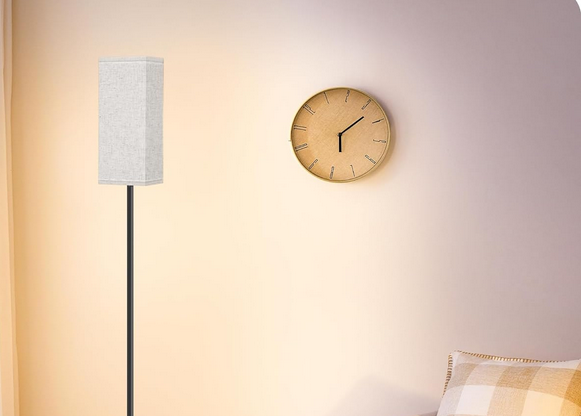
The torchiere is the most common floor lamp style. It directs light upward, bouncing it off the ceiling to create diffuse, ambient illumination. Because it fills a whole room with soft light, it works best in spaces where you want general brightness rather than focused task lighting.
Best for: Living rooms, bedrooms, open-plan spaces
Look for: A shade that's opaque on the outside but reflective on the interior for maximum uplight efficiency. Adjustable dimmer switches are a significant plus.
2. Arc Floor Lamps
Arc lamps have a long, curved arm that sweeps the shade outward, often over a sofa or reading chair, providing overhead-style light without a ceiling fixture. They're dramatic in appearance and very practical, pulling double duty as both a reading lamp and a visual anchor.
Best for: Beside sofas and sectionals, over reading chairs, in corners where wall space is limited
Look for: A heavy base (arc lamps tip easily if the base is too light), a shade that diffuses light rather than directing it harshly, and a height of at least 70 inches so the light clears the furniture it arches over.
3. Tripod Floor Lamps
Tripod lamps have three angled legs supporting a central shade. Their visual appeal is purely aesthetic, they make a strong design statement and work well in mid-century modern, Scandinavian, and eclectic interiors. Lighting output varies widely by shade type.
Best for: Design-conscious living rooms and home offices where the lamp will be a feature piece
Look for: Solid leg construction (wooden legs tend to feel more premium than thin metal), and a drum or empire shade in a fabric that gives a warm glow rather than harsh direct light.
4. Reading and Task Floor Lamps
These lamps are designed to direct bright, focused light onto a specific area, a book, a desk surface, a craft project. They typically have an adjustable arm or neck, a shade that points downward, and are positioned directly beside or behind the seat or work surface.
Best for: Beside reading chairs, next to desks in areas without overhead task lighting, in craft rooms
Look for: An adjustable arm or swivel head, a minimum of 1000 lumens for comfortable reading, and a color rendering index (CRI) of 90+ if you're working with color-sensitive tasks.
5. Pharmacy Floor Lamps
The pharmacy lamp is a classic, a straight pole with an adjustable shade on a pivoting arm, usually finished in polished brass, matte black, or nickel. It's understated, highly functional, and works in almost any style of room.
Best for: Traditional, transitional, and classic interiors; reading corners; home offices
Look for: A sturdy base and smooth swivel action on the arm. Brass and satin nickel finishes have the best longevity; avoid cheap chrome that can flake.
Choosing the Right Brightness
Lumens, not watts, tell you how much light a bulb produces:
- 800 lumens: equivalent to an old 60W bulb; adequate for accent/mood lighting
- 1100–1600 lumens: equivalent to 75W–100W; good for general ambient or reading use
- 2000+ lumens: bright task or office lighting
For most living room floor lamps, 800–1100 lumens is the sweet spot. For dedicated reading lamps, aim for 1100 lumens or higher. Color temperature matters too: choose 2700–3000K (warm white) for living spaces, and 3500–4000K only in work-focused settings.
Placement Tips by Room
Living Room
Place a torchiere or arc lamp in the corner diagonally opposite your main light source. This balances the room's light distribution and eliminates gloomy corners. An arc lamp over one end of the sofa creates a comfortable reading zone without needing a side table.
Bedroom
A pharmacy or reading lamp beside an armchair creates a dedicated reading nook. Avoid placing bright lamps opposite the bed, you want to wind down, not illuminate. A dimmable torchiere near a wardrobe area can serve as general bedroom light when you need it.
Home Office
Task lighting is critical here. A reading or adjustable floor lamp placed to the side of your monitor (not directly behind your screen) reduces eye fatigue. Choose a lamp with a CRI of 90+ and a color temperature around 3500K for focused work.
Entryway or Hallway
A slim tripod or torchiere in an entryway corner adds warmth and makes the space feel larger by drawing the eye upward. Choose a style that sets the tone for the rest of your home's decor.
What to Avoid
- Lamps that are too short for the space, the shade should be at roughly eye level or above when seated
- Arc lamps with undersized bases, they tip hazardously
- Cool-white (5000K+) bulbs in residential rooms, they create a clinical, uncomfortable atmosphere
- Non-dimmable fixtures in living areas, the ability to adjust light level is a significant quality-of-life feature
Final Checklist Before You Buy
- What function does the lamp need to serve? (Ambient, task, or accent?)
- What style and finish matches your existing furniture?
- How tall is the space? (Rooms with low ceilings suit shorter, wider lamps)
- Does it accept an E26 standard bulb, or a specialty bulb?
- Is there a dimmer switch, or is it switchable at the fixture?
Answer these questions before you shop and you'll make a confident, lasting choice.